21 Jun 2026
Altitude Adjustments Recalibrating Pitch Trajectories and Player Recovery Cycles During High-Elevation Soccer Leagues Alongside Golf Majors
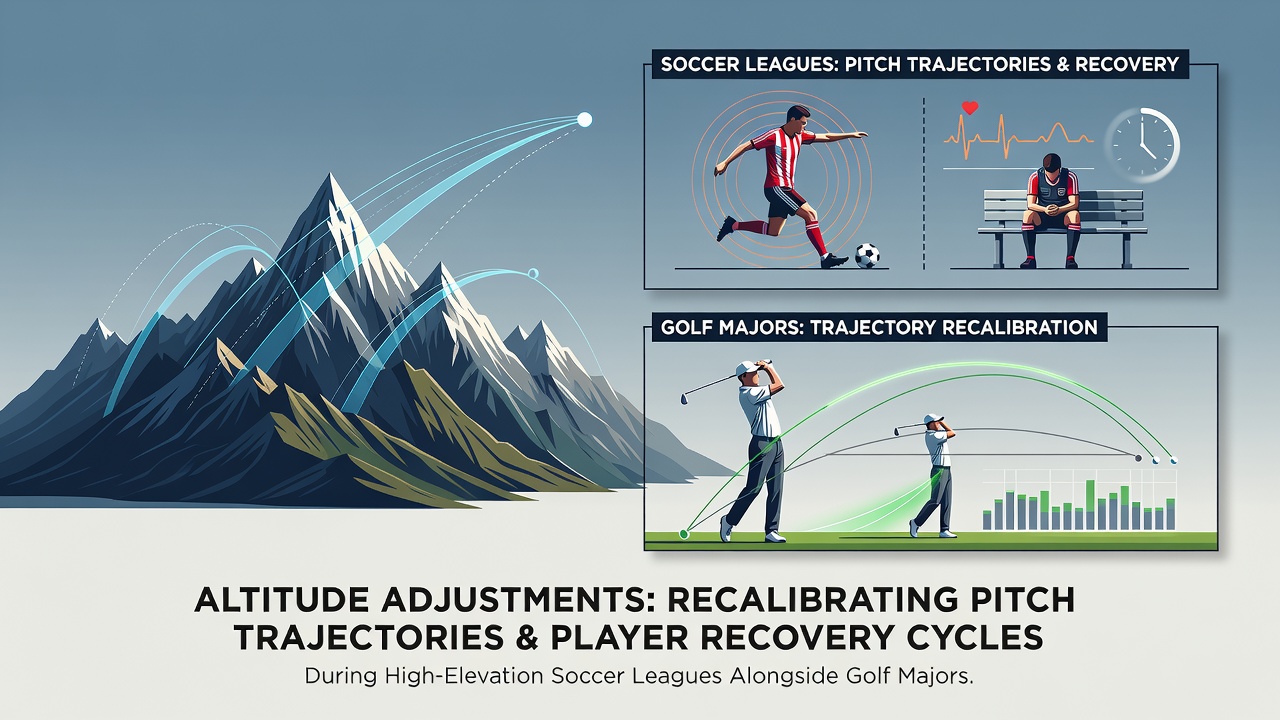
High-elevation venues alter ball flight patterns and oxygen availability, which forces teams in soccer leagues and golf tournaments to recalibrate equipment setups, training protocols, and recovery timelines. Soccer clubs operating in places like Mexico City's Estadio Azteca at 2,240 meters or Bolivia's Hernando Siles Stadium at 3,600 meters report measurable increases in ball travel distance, while golfers competing at courses above 1,500 meters experience similar trajectory extensions that change club selection and swing mechanics.
Soccer Leagues Operating at Elevation
Leagues such as Liga MX and Bolivia's División Profesional schedule matches where reduced air density extends passes and shots by up to 10 percent according to data collected by club performance staffs, and this shift prompts coaches to adjust defensive lines and pressing triggers because the ball moves faster through thinner atmosphere. Players require longer acclimatization periods before matches, with teams arriving several days early to allow hemoglobin levels to stabilize and heart rates to normalize during high-intensity intervals. Recovery cycles incorporate mandatory hydration checkpoints and scheduled rest windows because oxygen saturation drops more rapidly during repeated sprints, which extends muscle repair time between fixtures.
Medical staff monitor blood oxygen levels daily and modify nutrition plans to include additional iron and antioxidants, while sleep schedules receive extra attention since altitude can disrupt circadian rhythms. In June 2026, several Liga MX clubs will host midweek games at altitude followed by travel to sea-level venues, creating compressed recovery windows that test squad rotation strategies.
Golf Majors and Elevation Effects
Golf majors occasionally feature courses situated at higher elevations, such as certain U.S. Open layouts in Colorado or international events in Mexico, where the ball carries farther and rolls with less friction on firmer turf. Players and caddies recalibrate yardage books to account for these changes, often selecting lower-lofted clubs on approach shots because carry distance increases by roughly 8 to 12 percent at 1,800 meters compared with sea level. Swing speed adjustments become necessary because the reduced resistance alters spin rates, which affects stopping power on greens.
Recovery protocols for golfers include targeted breathing exercises between rounds and monitored fluid intake to offset dehydration risks that accelerate at elevation. Tournament organizers provide additional medical support stations, and players often incorporate altitude simulation tents during practice weeks leading up to events.

Shared Biomechanical and Physiological Adjustments
Both sports rely on similar physiological responses when competing above 1,500 meters, where lower partial pressure of oxygen reduces aerobic capacity and increases reliance on anaerobic pathways during explosive movements. Soccer midfielders and golfers walking full rounds experience elevated heart rates during routine activity, which shortens the time available for full recovery between efforts. Training programs now incorporate repeated sprint drills at simulated altitude for soccer squads and high-repetition swing sessions in hypoxic chambers for golfers to build tolerance ahead of competition.
Equipment modifications appear across both disciplines, with soccer balls sometimes featuring adjusted inflation pressures to stabilize flight consistency while golf balls and clubs receive minimal changes because rules limit alterations. Data from performance tracking systems reveal that teams and players who integrate structured acclimatization blocks maintain higher output levels across multiple matches or rounds compared with those who arrive without preparation.
Case Examples from Recent Seasons
One study conducted by researchers at the University of Calgary examined heart rate variability in soccer players during back-to-back matches at 2,200 meters and documented extended recovery intervals of 48 to 72 hours before baseline metrics returned. Golfers participating in the 2024 Mexico Open reported needing extra warm-up time on the range because initial shots carried farther than expected, prompting last-minute club changes that affected scoring averages on early holes.
League schedules in high-elevation regions now factor these variables into fixture lists, spacing games to allow adequate rest and incorporating mandatory medical assessments after travel from lower altitudes. Golf tours coordinate with course superintendents to adjust pin placements and rough heights in response to how elevation influences roll distances.
Monitoring Technologies and Data Integration
Wearable sensors track oxygen saturation, sleep quality, and workload metrics for athletes in both sports, feeding information into centralized systems that flag when recovery thresholds fall below safe levels. Soccer clubs use GPS units to measure total distance covered and high-speed running percentages that shift at altitude, while golf performance analysts overlay launch monitor data with elevation-corrected models to refine strategy. These tools enable staff to predict when players will reach peak readiness and to adjust training loads accordingly.
Conclusion
Altitude creates consistent physical and tactical variables that soccer leagues and golf majors must address through targeted preparation, equipment calibration, and structured recovery planning. Data collected across multiple seasons shows that teams and players who implement elevation-specific protocols achieve more stable performance outcomes, while those who overlook these factors encounter extended fatigue periods and reduced output. As schedules continue to place events at high-elevation sites, the integration of physiological monitoring and advance acclimatization remains central to maintaining competitive balance.