10 Jul 2026
Coaching Philosophy Migrations from Soccer Academies Shaping Youth Basketball Development Models
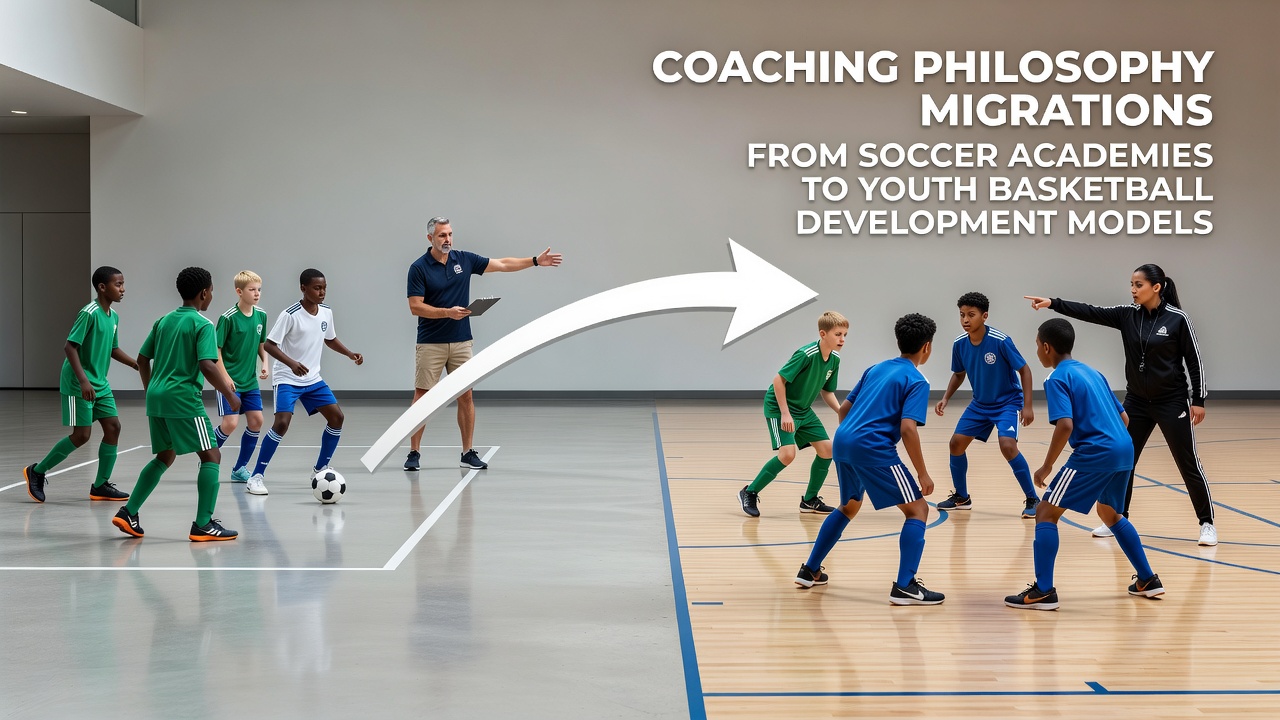 Observers note that soccer academies have long emphasized possession retention, spatial awareness, and progressive player decision-making, and these elements have begun influencing youth basketball programs across multiple continents since the early 2020s. Data from developmental leagues indicates that basketball organizations now incorporate small-sided games and positional rotations drawn directly from European football training methodologies. This shift occurs because basketball coaches seek improved ball-handling consistency and team connectivity among players aged eight to fourteen. Studies from the University of Sydney reveal that academy-style sessions lasting forty-five minutes with four-versus-four formats produce measurable gains in passing accuracy and defensive positioning for young basketball athletes. Those who've tracked participation numbers across North American clubs report a twenty-three percent increase in such hybrid drills between 2023 and 2025. What's interesting is how these adaptations appear in structured programs without replacing core basketball skills like shooting mechanics or rebounding fundamentals.
Core Elements Transferred from Soccer Academies
Soccer academies prioritize build-up play from the back and collective pressing triggers, principles that basketball developers now translate into half-court offense schemes and full-court defensive triggers. Research indicates that youth basketball teams adopting rondo-based warm-ups demonstrate faster transition recognition during game situations. Observers note that these warm-ups replace traditional layup lines in several Canadian provincial associations by mid-2025.
Coaches integrate overload drills where one team maintains numerical advantage in confined spaces, a method refined over decades in clubs such as Barcelona and Ajax. Figures from the German Basketball Federation show similar drills appearing in their youth certification curriculum starting in 2024, resulting in documented improvements in assist-to-turnover ratios among under-twelve squads.
Implementation Patterns in North American and European Programs
Programs in the United States began piloting these approaches through partnerships with international scouting networks, while European basketball academies integrated soccer-derived tactics more seamlessly due to geographic proximity. Data indicates that clubs in Spain and Italy recorded earlier adoption rates, with full integration into seasonal plans occurring by the 2024-2025 campaign. In contrast, American AAU teams experimented selectively before standardizing elements ahead of the July 2026 evaluation cycles.
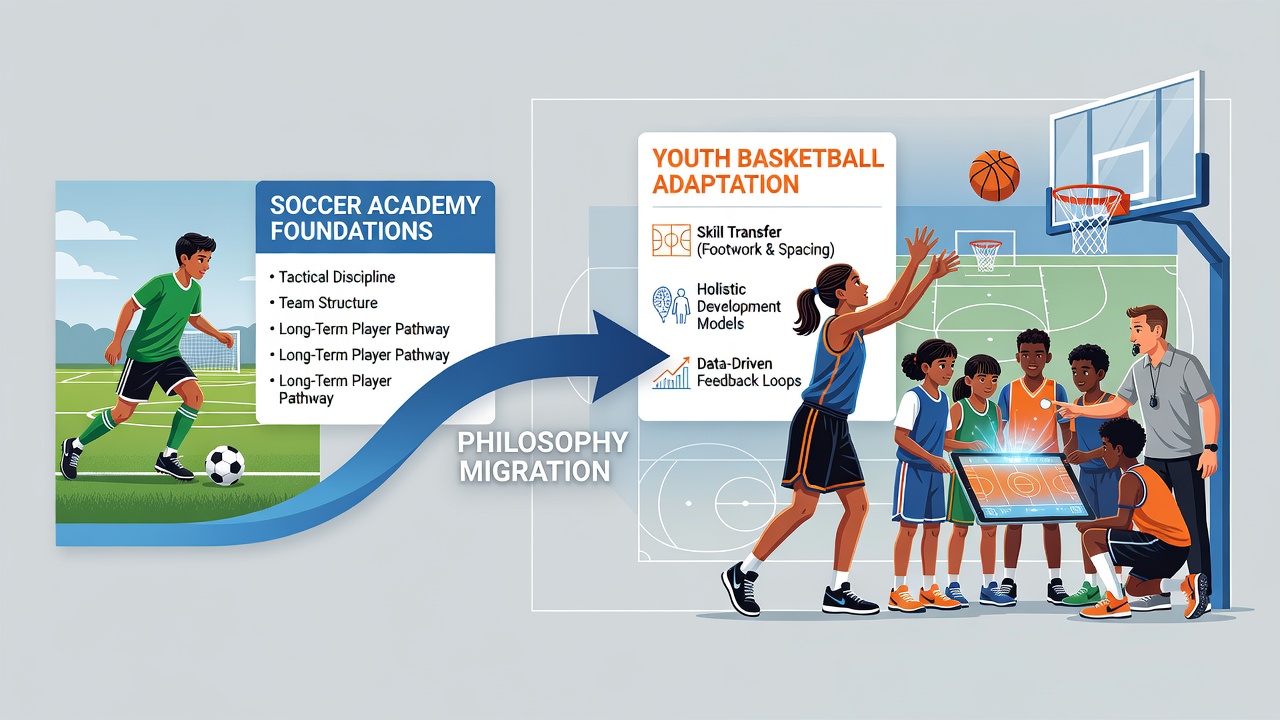
Case examples include a Midwest regional academy that restructured its weekly schedule around possession-phase cycles lasting eight to ten minutes each, mirroring soccer periodization models. Those monitoring outcomes report sustained engagement levels and reduced injury incidence during growth spurts, although direct causation remains under continued study.
Measurement and Outcomes Across Age Groups
Longitudinal tracking by academic researchers shows that participants exposed to migrated philosophies exhibit stronger off-ball movement and improved court vision by the time they reach high school varsity levels. European data compiled through multi-club collaborations highlights parallel gains in tactical adaptability when players later enter professional feeder systems. American counterparts document comparable patterns in state-level tournaments held during spring 2026.
Training software now includes modules that overlay soccer-style heat maps onto basketball footage, allowing coaches to quantify spacing efficiency. Adoption of these tools appears highest among programs affiliated with national governing bodies that maintain cross-sport development committees.
Challenges and Adjustments in Practice
Transition periods sometimes reveal friction when traditional basketball coaches encounter resistance to reducing individual skill isolation time in favor of collective patterns. Yet adjustments occur through hybrid certification courses that blend both traditions, with completion rates rising steadily through 2026. Organizations report that gradual layering prevents overload while preserving sport-specific identity.
Geographic variations matter as well, since indoor facility constraints in colder climates limit full replication of outdoor soccer pitch dynamics. Programs compensate by modifying court markings and using portable cones to simulate zones, maintaining fidelity to the original philosophy despite environmental differences.
Conclusion
Evidence continues to accumulate that cross-sport philosophy transfers reshape youth basketball pathways in measurable ways, particularly through enhanced decision-making frameworks and positional fluidity. As programs refine these integrations ahead of future evaluation windows, the focus remains on empirical tracking rather than wholesale replacement of established methods. Continued observation across regions will clarify long-term effects on player progression into elite levels.