24 Jul 2026
Cross-border talent pipelines: how scouting algorithms from European handball circuits are redirecting athletic prospects into North American hockey and lacrosse academies
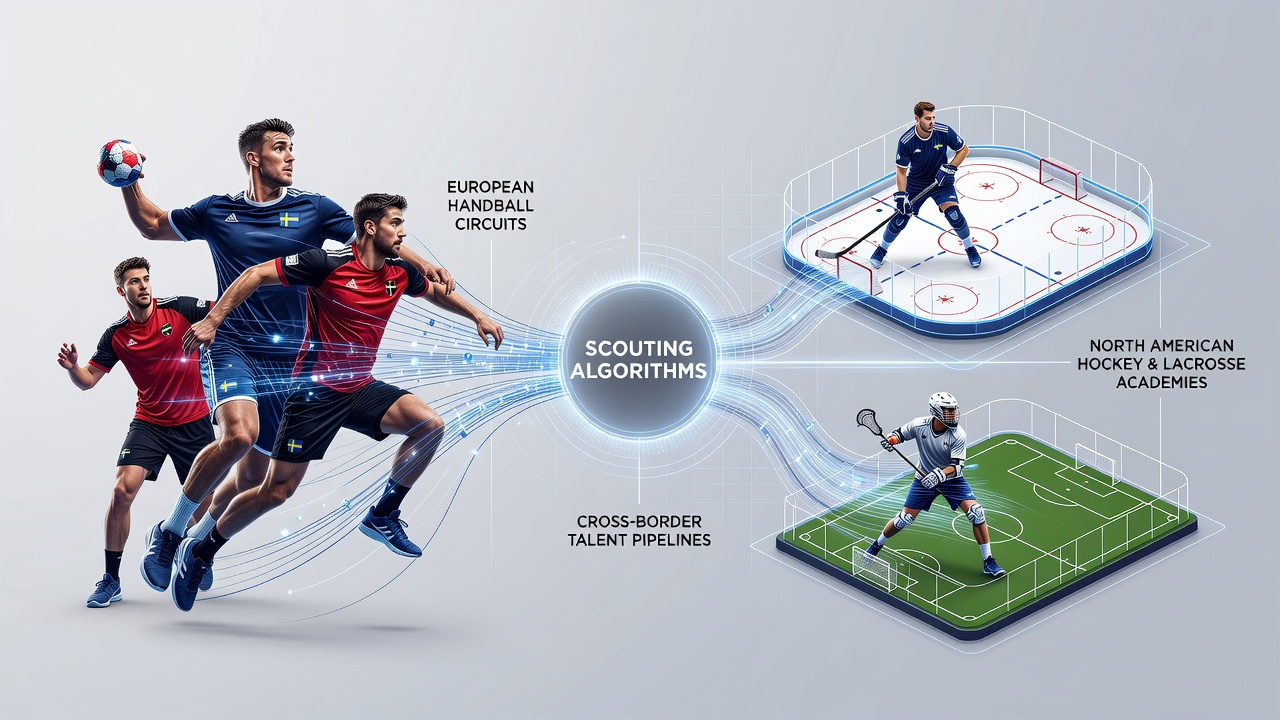
European handball circuits have developed scouting algorithms that track metrics such as sprint speed, lateral movement, and throwing velocity, and these systems now route selected prospects toward North American hockey and lacrosse academies. Data collected during youth tournaments in Germany, Denmark, and France feeds into models that flag athletes whose physical profiles align with demands in ice hockey and field lacrosse. By July 2026 several academies in Canada and the United States reported increased enrollment from these pipelines, with transfer numbers rising steadily since 2023.
Algorithm design and data inputs
Scouting platforms combine wearable sensor readings with video analysis to produce composite scores for each player. Handball federations supply anonymized datasets that include match counts, injury histories, and positional heat maps, allowing algorithms to identify transferable skills without requiring direct observation by North American scouts. Researchers at institutions in Scandinavia note that the same variables used to predict elite handball performance also correlate with success in puck handling and stick checks once athletes adapt to new equipment.
Pathways into hockey and lacrosse programs
Once an algorithm flags a prospect, European clubs receive outreach from academy directors in Ontario, Minnesota, and British Columbia. These programs offer short-term visas and training stipends that cover travel and equipment costs. Athletes typically spend one preparatory season in handball before relocating, during which time they receive language instruction and rule tutorials specific to hockey or lacrosse. Figures released by the Canadian Sport Institute in 2025 show that 68 athletes entered this route during the prior twelve months, compared with 31 in 2022.
Coaches in North American academies adjust drills to capitalize on the hand-eye coordination already developed in European handball courts. Sessions emphasize edge work on skates or ground-ball pickups that mirror the quick releases familiar to handball players. This approach shortens the adaptation period, with many prospects reaching competitive rosters within eighteen months of arrival.

Regional variations and partnership models
Scandinavian clubs maintain formal agreements with specific academies in the United States, whereas French and German programs operate through open calls that any licensed academy may answer. In both models, performance benchmarks must be met before contracts are extended beyond the initial trial period. European governing bodies require that academic progress reports accompany athletic evaluations, ensuring participants maintain secondary education standards while abroad.
Observers note that lacrosse programs in Maryland and New York have absorbed a larger share of these recruits than hockey programs in colder climates, partly because field lacrosse shares more open-space dynamics with handball. Hockey pipelines concentrate in provinces with established junior leagues that provide additional development layers after academy graduation.
Performance tracking after relocation
Follow-up studies conducted by the Government of Canada sport research division track retention rates and competitive output. Data through mid-2026 indicate that athletes arriving via handball algorithms post comparable playing-time statistics to domestically recruited peers within two seasons. Injury incidence remains similar across groups when controlled for age and position, suggesting the scouting criteria effectively screen for durable physical traits.
Additional monitoring comes from academic partners at the University of British Columbia, where longitudinal datasets examine how prior handball experience influences decision-making speed under fatigue. Early results show modest advantages in read-and-react scenarios that translate to both hockey forecheck situations and lacrosse defensive slides.
Future outlook for cross-border systems
Expansion plans announced by several European federations call for wider sensor deployment at younger age groups, which could increase the pool of candidates available for North American placement. Regulatory frameworks in both source and destination countries continue to evolve around visa categories and education equivalency standards. As these administrative pieces align, the volume of redirected prospects is projected to grow through the remainder of the decade.
Conclusion
Scouting algorithms developed within European handball circuits have created measurable pathways that connect athletic prospects to hockey and lacrosse academies across North America. Performance data collected through 2026 demonstrate consistent transfer volumes and comparable on-field outcomes for participants. Continued refinement of these systems, paired with established partnership structures, supports ongoing movement of talent between the two continents.