8 Jul 2026
Cross-Continental Broadcast Syncs: How Live Streaming Timelines Align Viewer Habits Across Distant Time Zones in Pro Leagues
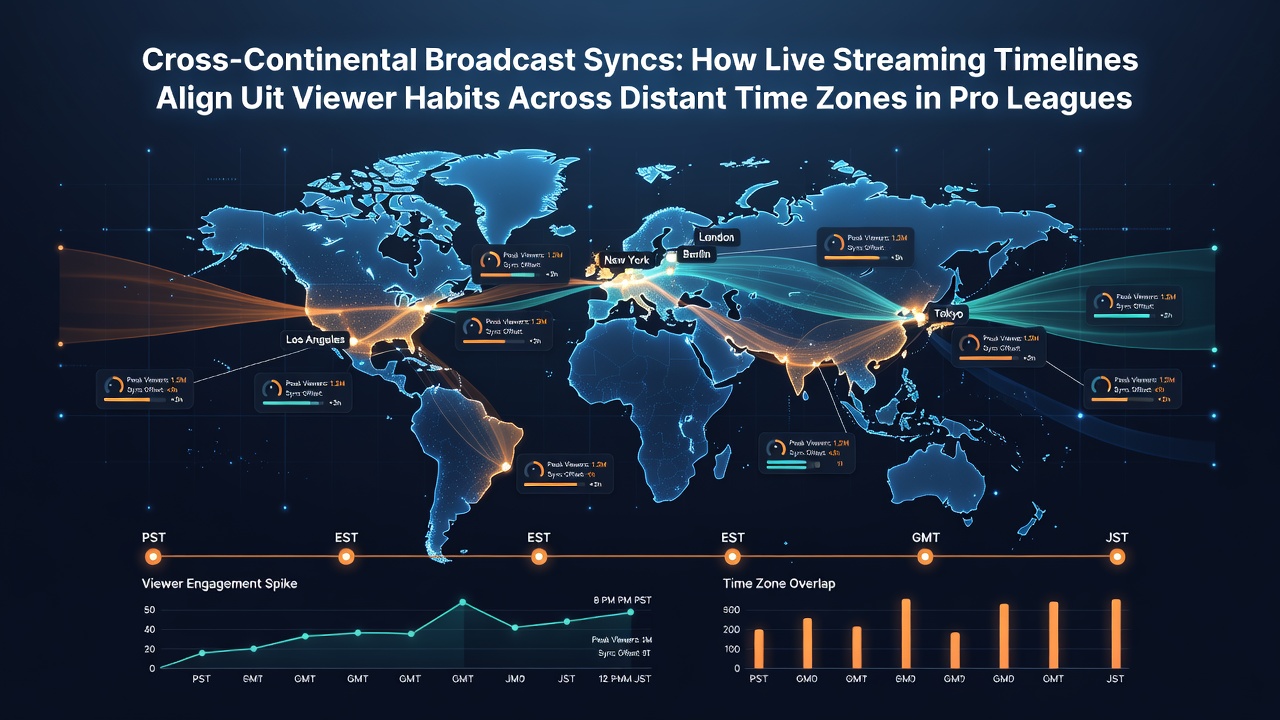
Professional sports leagues coordinate live broadcasts to accommodate audiences spread across continents, and streaming services play a central role in aligning start times with peak viewer availability in each region. Data from multiple sources indicate that NBA, NFL, and soccer matches often feature adjusted schedules or dual-feed options that account for time differences between North America, Europe, Asia, and Australia. Observers note patterns where leagues release programming calendars months ahead, allowing platforms to optimize delivery based on historical viewership metrics collected by broadcasters and analytics firms.
Time Zone Coordination in League Scheduling
Leagues compile international calendars that factor in prime viewing windows for key markets, and this process involves collaboration between teams, media rights holders, and technology providers. The NBA, for instance, publishes its regular-season slate each summer with specific attention to Asian and European audiences through late-night or early-morning tip-offs in North American time. Researchers at academic institutions have tracked how these decisions correlate with increased concurrent streams in regions such as China and the United Kingdom during overlapping hours. Figures from the Federal Communications Commission media consumption reports show that cross-time-zone delivery has grown steadily since the expansion of high-bandwidth networks in the early 2020s, enabling simultaneous access without significant delays.
European soccer competitions follow similar logic when setting kickoff times for Champions League matches, and data collected across seasons reveal consistent spikes in viewership from North American time zones when games begin in the late afternoon local time. Analysts compile these trends from platform telemetry, and the resulting adjustments help maintain engagement levels even when live events occur outside traditional domestic hours.
Streaming Technology adn Timeline Synchronization
Modern platforms employ content delivery networks that buffer and timestamp feeds to match user location data, and this infrastructure reduces lag between broadcast origin and remote viewers. Services distribute multiple audio tracks and graphics overlays calibrated for different regions, so commentary and on-screen information remain relevant regardless of the clock on a fan's device. Studies from research groups in Canada and Australia document how these systems handle variable network conditions while preserving the sequence of play-by-play events across longitudes.
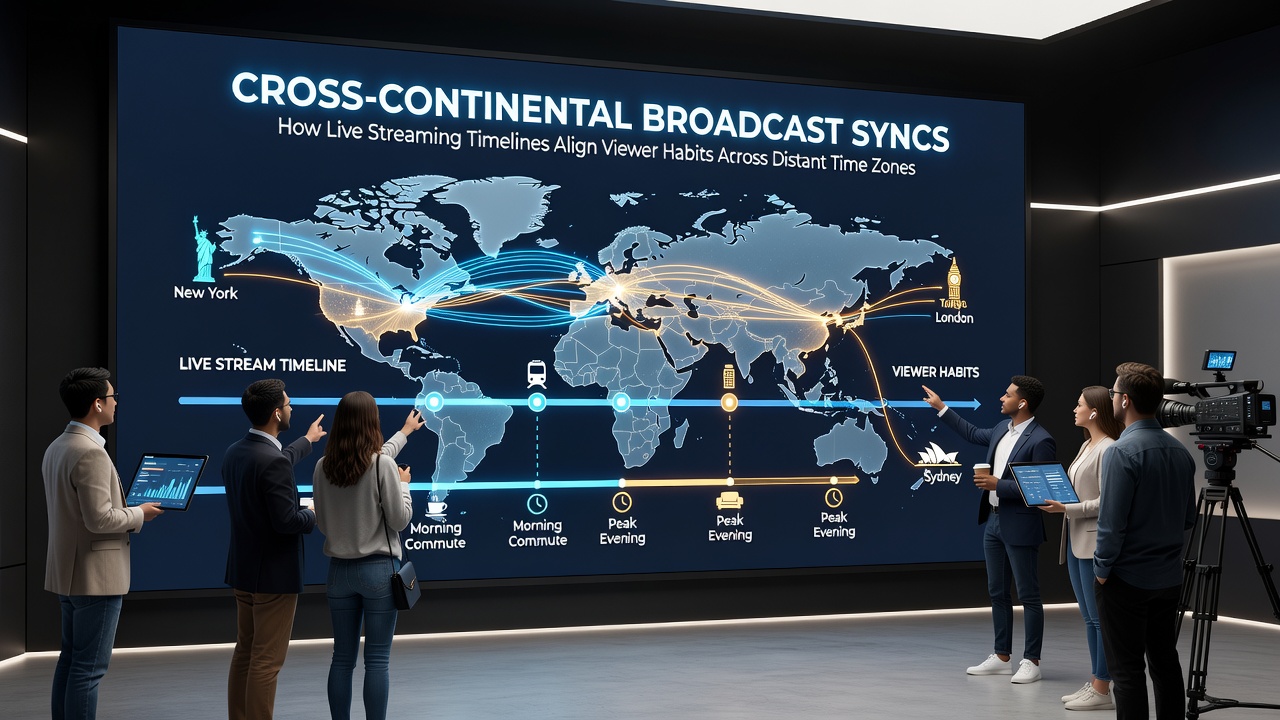
Multi-angle camera feeds and interactive features appear at consistent points in each match timeline, and backend synchronization protocols ensure that highlights and replays activate uniformly for users in distant locations. Technical standards developed through industry bodies allow leagues to test these alignments during preseason exhibitions before full-scale implementation.
Viewer Habit Patterns Across Regions
Engagement data collected over multiple seasons demonstrate that audiences adapt routines around fixed broadcast windows, and mobile notifications prompt logins at predetermined intervals. In Asia, daytime viewing of North American evening games has become routine for certain demographics, while European fans often tune into afternoon MLB contests during summer months. Reports compiled by the European Commission on digital audiovisual services highlight measurable shifts in daily media consumption as streaming options expand, and these changes appear most pronounced among younger viewers who access content via apps rather than traditional television.
Platform operators release periodic summaries that break down average session lengths by geographic cluster, and the numbers show longer dwell times when start times align with local leisure periods. Leagues use these insights to refine future calendars without altering core competition structures.
Developments Observed in July 2026
During July 2026, several leagues released updated international broadcast schedules that incorporated real-time analytics from the preceding season, and early indicators pointed to expanded dual-language options for matches crossing major time boundaries. Summer league events and international friendlies provided test cases where streaming timelines were adjusted based on viewer location heat maps, and participation metrics from those periods informed adjustments for the fall campaigns. Government statistical agencies in multiple countries recorded corresponding increases in cross-border data traffic during these windows, confirming the ongoing integration of live sports into global digital routines.
Conclusion
Cross-continental broadcast synchronization continues to evolve through combined efforts of leagues, technology providers, and data analysts who map viewer availability against fixed competition calendars. The mechanisms that align timelines across distant zones rely on established scheduling practices, platform capabilities, and measurable consumption patterns rather than isolated adjustments. Ongoing collection of regional metrics supports incremental refinements that maintain access consistency for audiences regardless of longitude.