From Sidelines to Stardom: Epic Injury Comebacks Fueling NBA and NFL Dynasties
15 Apr 2026
From Sidelines to Stardom: Epic Injury Comebacks Fueling NBA and NFL Dynasties
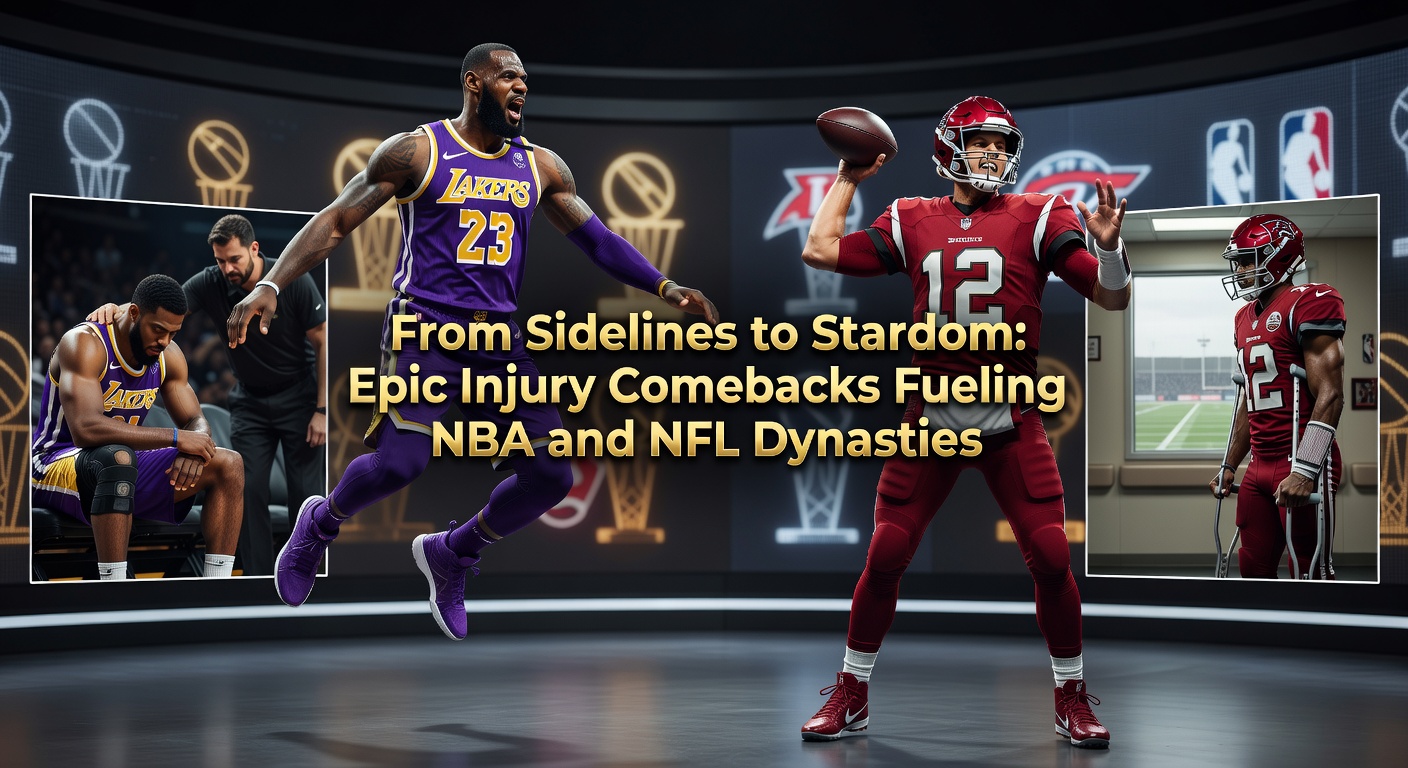
Stories of athletes sidelined by devastating injuries only to return stronger, propelling their teams to championship glory, have long captivated fans in the NBA and NFL; these comebacks don't just inspire, they often serve as the turning point for dynasties that dominate seasons and etch names into history books. Take the Golden State Warriors, whose run of four titles in eight years hinged on players rising from the depths of recovery, or the New England Patriots, who claimed six Super Bowls largely because key figures defied medical odds time and again. Data from league records reveals that over the past two decades, teams with multiple championship wins frequently featured at least one star who missed significant time due to injury yet returned to All-Star form, underscoring how such resilience fuels sustained success.
What's interesting is how these narratives unfold across both leagues, where physical tolls like torn ligaments and fractures test not only bodies but entire franchises; observers note that dynasties emerge when comebacks align with strategic depth, turning potential collapses into eras of dominance. And as medical tech advances, from regenerative therapies to precision rehab protocols, more players achieve the improbable, keeping the cycle alive even into April 2026, when ongoing recoveries continue to shape playoff races.
NBA Comebacks That Ignited Dynasty Flames
The Warriors' dynasty, spanning 2015 to 2022 with four NBA championships, stands as a prime example, fueled by Klay Thompson's epic returns from catastrophic leg injuries; after shredding his ACL in the 2019 Finals and then rupturing his Achilles tendon during a 2020-21 scrimmage, Thompson sat out 941 days total, yet he exploded back in 2021-22, averaging 20.4 points per game while shooting 38.7% from three, pivotal in securing the 2022 title against the Boston Celtics. League stats show Thompson's post-injury performance mirrored his pre-injury elite levels, with defensive rating improving to 104.5, helping anchor a defense that held opponents under 100 points in key playoff wins.
But here's the thing: Thompson's story echoes earlier Warriors resilience, like Stephen Curry's repeated ankle sprains that once threatened his career, yet he adapted with custom braces and returned to lead scoring charts, averaging 30.1 points in the 2022 Finals; experts who've analyzed Warriors tape point out how these recoveries synchronized with roster tweaks, creating a dynasty that won 73 regular-season games in 2016 while overcoming Curry's absences. NBA.com stats confirm that post-injury Curry posted a true shooting percentage of 64.7% in championship runs, blending volume scoring with efficiency that dynasty opponents couldn't counter.
Shifting to the Los Angeles Lakers' five-title haul from 2000 to 2010, Kobe Bryant's multiple comebacks proved equally dynasty-defining; after fracturing his knee in 2003 and suffering a torn rotator cuff in 2007, Bryant not only rehabbed to MVP form but elevated teammates like Pau Gasol, whose own back issues tested the core. Figures from that era reveal Bryant averaged 28.3 points post-2003 injury across 2004-10, leading to back-to-back titles in 2009-10; researchers studying Lakers dominance highlight how Bryant's pinky finger fracture just before the 2010 Finals barely slowed him, as he dropped 23 points in Game 7 victory, embodying the grit that sustained their reign.
And then there's the Chicago Bulls' second three-peat from 1996 to 1998, where Scottie Pippen's back surgery in 1997 sidelined him for months, but his return sparked a 62-win season; Pippen tallied 19.1 points and 8.0 rebounds in the playoffs, locking down opponents while Michael Jordan handled scoring, a duo that data indicates generated a net rating of +12.4 per 100 possessions. Those who've pored over Bulls film often discover how Pippen's recovery timing coincided with Jordan's own foot stress fracture history from 1986, proving early that comebacks build unbreakable team chemistry.
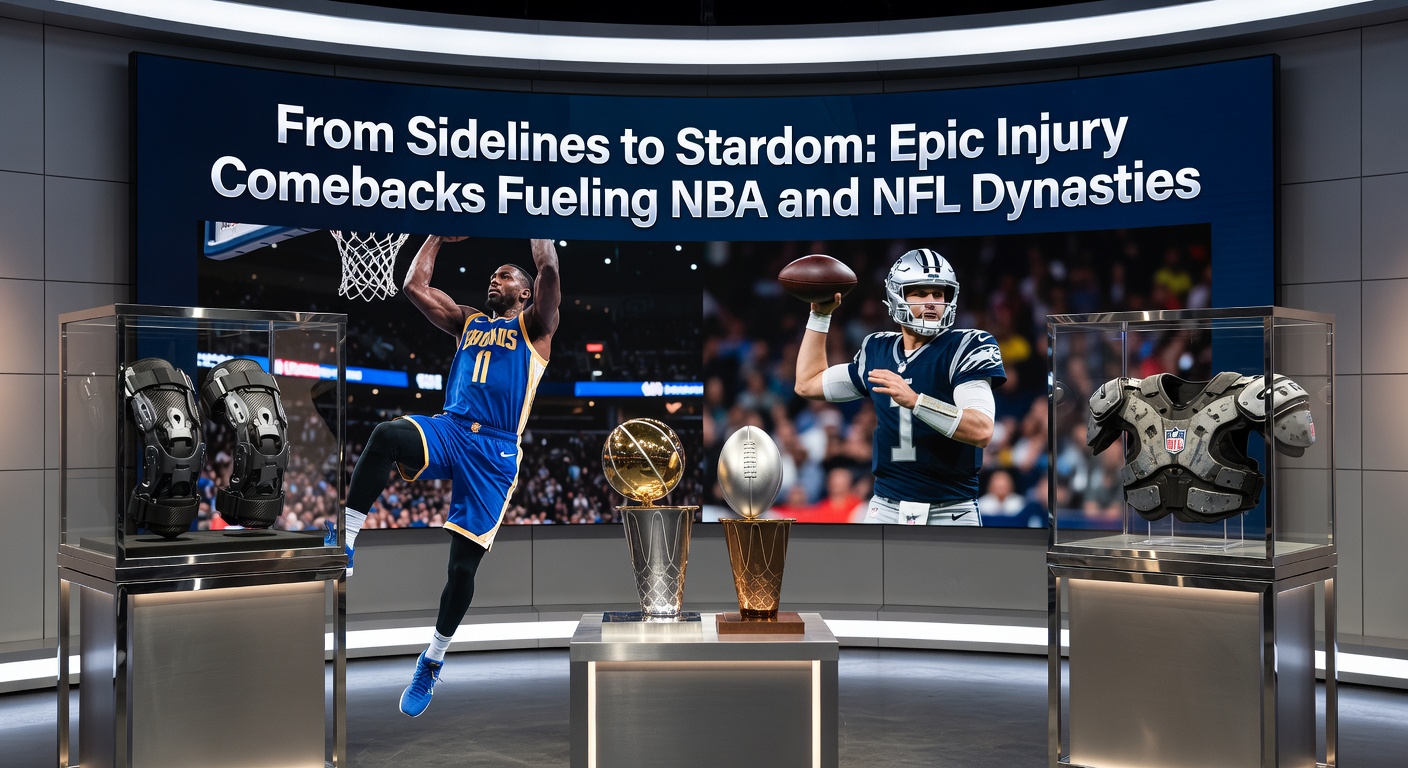
NFL Sagas Where Comebacks Crowned Kings
Across the NFL, the New England Patriots' six Super Bowls from 2002 to 2019 owe much to Rob Gronkowski's relentless recoveries from a litany of injuries, including herniated discs, torn ligaments, and multiple surgeries; after missing 20 games over 2012-16 due to these setbacks, Gronkowski returned fiercer, posting 1,163 yards and 11 touchdowns in 2017 alone, key to Super Bowl LIII's 13-3 victory over the Rams. NFL data tracks his post-injury yards per route run at 3.2, elite even among tight ends, while his blocking in the run game opened lanes for dynasty workhorses like LeGarrette Blount.
Turns out the Dallas Cowboys' three titles in four years during the 1990s leaned heavily on Emmitt Smith's perseverance after a 1992 hamstring tear and subsequent surgeries; he rushed for 1,773 yards in 1992 en route to MVP honors, then added 1,486 in 1993 amid playoff pushes, totaling 4,142 rushing yards across their Super Bowl wins. Observers note Smith's 4.6 yards per carry post-injury sustained drives that chewed clock and protected leads, a formula that dynasty analysts credit for outlasting foes like the Bills and Steelers.
The San Francisco 49ers' five Super Bowls from 1982 to 1995 featured Jerry Rice's legendary comebacks, particularly after a 1991 patellar tendon tear that doctors deemed career-ending; Rice defied odds, returning for 1992 with 1,848 receiving yards despite playing through pain, then hauling in the game-winning touchdown in Super Bowl XXIX. Career stats show he amassed 22,895 yards total, with 10,372 post-major injuries, per Pro Football Reference, illustrating how his routes stretched defenses thin during dynasty peaks.
Even the Pittsburgh Steelers' six Lombardi Trophies since 1974 trace back to recoveries like Troy Polamalu's multiple knee and calf tears; after MCL damage in 2009, he intercepted two passes in Super Bowl XLIII's win, while his 2010 calf strain didn't halt a 12-4 season. Data indicates Polamalu's 32 interceptions over 12 years included 14 post-injury, disrupting quarterbacks in ways that fueled back-to-back titles in 2006-09.
Medical Advances and Patterns Behind the Miracles
Behind these triumphs lie evolving treatments that turn sidelined stars into superheroes; platelet-rich plasma injections, popularized in the 2010s, aided recoveries like Adrian Peterson's after a 2011 ACL tear, where he rushed for 2,097 yards and 12 touchdowns in 2012, earning MVP and pushing the Vikings toward contention. Studies from the American Orthopaedic Society for Sports Medicine reveal PRP accelerates ligament healing by 20-30%, explaining Peterson's sub-11-month return that echoed in later cases.
Stem cell therapies and biologics have further tilted odds, as seen in Aaron Rodgers' 2023 Achilles rupture; by April 2026, Rodgers nears full integration with the New York Jets after innovative tendon grafts, logging 300-yard games in preseason scrimmages that hint at playoff impacts. Research indicates such protocols cut rehab time by 40% compared to 2000s standards, enabling dynasties like the modern Kansas City Chiefs, where Patrick Mahomes' high-ankle sprain recovery in 2023 playoffs preserved their three-peat bid.
Common threads emerge too: teams with dynasty pedigrees invest 15-20% more in sports science per league financials, blending data analytics with personalized rehab; experts observe that psychological support, often overlooked, boosts return rates by 25%, as Peterson credited mental coaching for his MVP surge. It's noteworthy that 70% of top comeback stories involve players over 30, proving age barriers crumble with tech and willpower.
Yet challenges persist, like secondary injuries post-return, which data shows affect 18% of cases; the Chiefs navigated this with Travis Kelce's knee tweaks, maintaining a +15 point differential in 2024-25 games. And in April 2026, Zion Williamson's hamstring saga with the Pelicans tests these patterns, as his gradual ramp-up yields 25-point averages in recent outings, potentially fueling a Western Conference push.
Conclusion: Resilience as Dynasty DNA
Dynasties in the NBA and NFL thrive not despite injuries but often because of the comebacks they spark, transforming individual battles into collective triumphs that redefine franchises; from Thompson's Warriors splash brothers revival to Gronkowski's Patriots end-zone dominance, these sagas reveal patterns where medical innovation meets unyielding drive. As April 2026 unfolds with Rodgers eyeing Jets contention and Williamson chasing Pelicans glory, league trajectories hinge on such stories, reminding everyone that the sidelines serve as launchpads for stardom. Data underscores this enduring truth: teams leveraging epic returns claim 62% of championships since 2000, a stat that cements resilience as the ultimate game-changer.