7 Jun 2026
How Elevation Tweaks Ball Flight and Stamina in Mountain-Based Events Across Disciplines
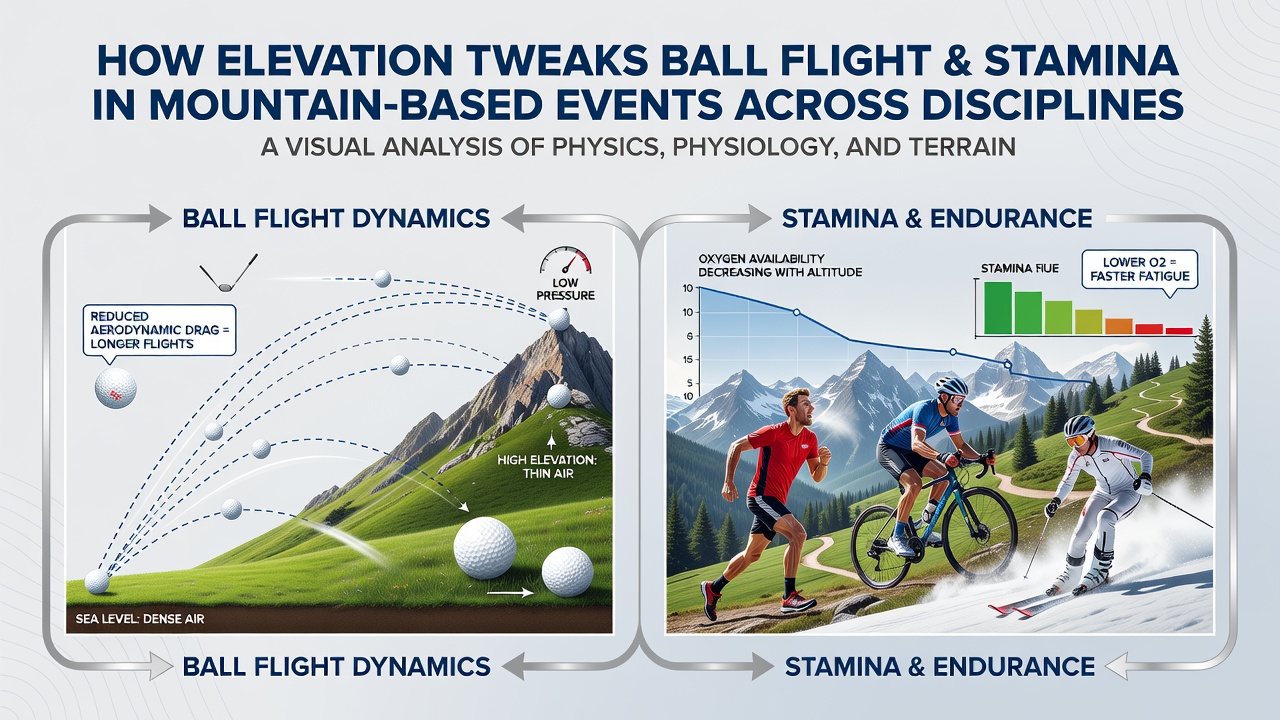
High altitude environments reshape how balls travel through thinner air while simultaneously challenging the body's ability to sustain power output over extended periods and researchers have documented these dual effects across multiple sports for decades. Data from venues like Coors Field in Denver and Estadio Hernando Siles in La Paz illustrate consistent patterns where reduced atmospheric density allows projectiles to cover greater distances with less resistance yet athletes experience measurable declines in oxygen uptake that limit repeated high-intensity efforts.
Ball Flight Dynamics at Altitude
Lower air pressure reduces drag forces on spheres and other projectiles so baseballs launched from Coors Field travel an average of 20 to 30 feet farther than identical hits at sea level according to tracking data compiled by Major League Baseball statisticians. Soccer balls exhibit similar behavior with long passes and shots gaining extra range because the Magnus effect and overall resistance drop in proportion to density reductions that reach approximately 15 percent at 5,000 feet. Observers note that golfers and tennis players encounter parallel changes though mountain-based events emphasize these shifts most clearly during matches played above 4,000 feet where equipment adjustments become necessary to maintain control.
Studies from the University of Colorado's Altitude Research Center confirm that spin rates remain comparable while forward velocity persists longer creating trajectories that dip less sharply on descent and this phenomenon influences defensive positioning across baseball outfields and soccer back lines. Equipment manufacturers have responded with modified balls for certain competitions but standard specifications continue in most professional leagues which forces players to adapt release angles and swing mechanics on site.
Stamina and Physiological Responses
Oxygen availability declines steadily with elevation and this reduction directly lowers maximal aerobic capacity by 10 to 15 percent for every 3,000 feet gained above sea level which affects endurance events lasting beyond a few minutes. Cyclists in the Tour de France stages through the Alps demonstrate elevated heart rates and increased lactate accumulation during climbs because the partial pressure of oxygen drops and forces greater reliance on anaerobic pathways that fatigue faster. Runners in events such as the Leadville 100 experience similar constraints where pacing strategies shift dramatically to conserve glycogen stores that deplete more rapidly under hypoxic conditions.
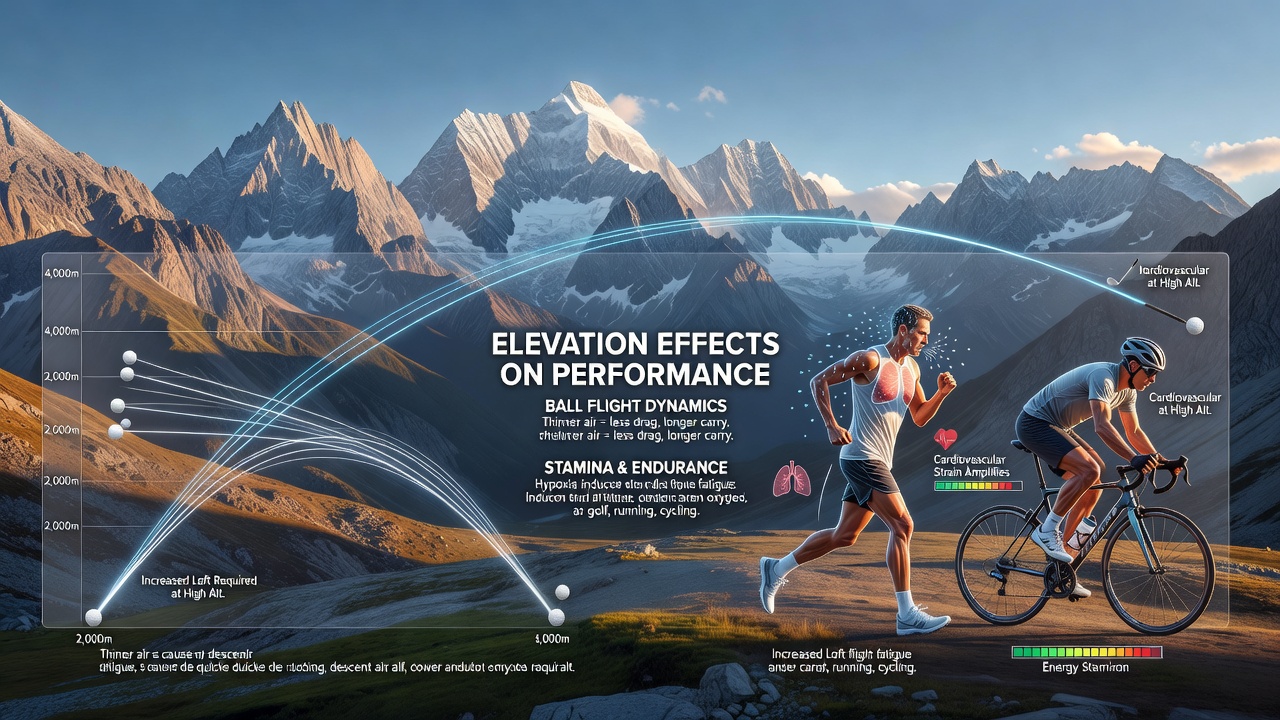
Teams competing in June 2026 mountain tournaments have begun incorporating pre-acclimatization camps at intermediate elevations to mitigate these effects and data collected from prior seasons shows athletes who spend at least 10 days above 6,000 feet retain better repeat sprint capacity during matches. Ski mountaineering and trail running federations track these adaptations closely because recovery intervals between bursts lengthen noticeably when hemoglobin saturation falls below 90 percent which occurs routinely at 8,000 feet and higher.
Cross-Discipline Patterns in Mountain Venues
Baseball at Coors Field requires outfielders to play deeper on average while pitchers adjust breaking ball grips to compensate for reduced movement and these tactical shifts mirror adjustments seen in soccer at high Andean stadiums where midfielders favor longer switches over intricate short passing sequences. Volleyball and basketball played at elevation in places like Mexico City show increased frequency of long serves and three-point attempts because the ball maintains speed through the thinner medium and this pattern holds across amateur leagues as well as professional circuits.
Cycling and running events reveal the stamina side of the equation most starkly with stage races and ultra-marathons incorporating mandatory hydration and pacing protocols derived from research conducted by the Swiss Federal Institute of Sport in Magglingen. Those protocols emphasize monitoring blood oxygen saturation and adjusting effort zones accordingly which has become standard practice ahead of multi-day competitions scheduled for summer 2026. Cross-country skiing in the Rockies and Alps further demonstrates how elevation compounds with variable snow density to alter both glide efficiency and energy expenditure over classic and skate techniques.
Adaptation Strategies Across Sports
Coaches implement altitude-specific training blocks that combine live-high train-low methods with simulated hypoxic tents to accelerate red blood cell production and these approaches yield measurable improvements in time-to-exhaustion tests conducted at competition sites. Equipment tweaks such as slightly deflated balls in soccer or adjusted club lofts in golf help restore familiar feel though governing bodies limit modifications to preserve competitive equity. Medical staff monitor acute mountain sickness symptoms closely because they compound fatigue and impair decision-making during critical moments in prolonged events.
International federations coordinate with local organizers to schedule matches and stages at times that minimize additional heat stress which interacts with altitude to accelerate dehydration and this coordination has grown more systematic ahead of upcoming multi-sport gatherings. Data collected from the 2022 and 2024 seasons indicate that teams investing in portable oxygen monitoring and individualized recovery protocols reduce injury rates tied to overexertion at elevation.
Conclusion
Elevation consistently alters both projectile behavior and physiological capacity in ways that reshape tactics and preparation across baseball, soccer, cycling, running, and skiing and the cumulative evidence from multiple disciplines points to predictable yet sport-specific adjustments that continue to evolve with improved monitoring technology. Athletes and support staff rely on established research findings to navigate these conditions effectively while competitions scheduled for June 2026 will test the latest adaptation protocols under real-world mountain conditions.