17 Jul 2026
Night Game Dynamics: How Artificial Lighting Conditions Modify Outfield Plays in Baseball and Serve Accuracies in Tennis Matches
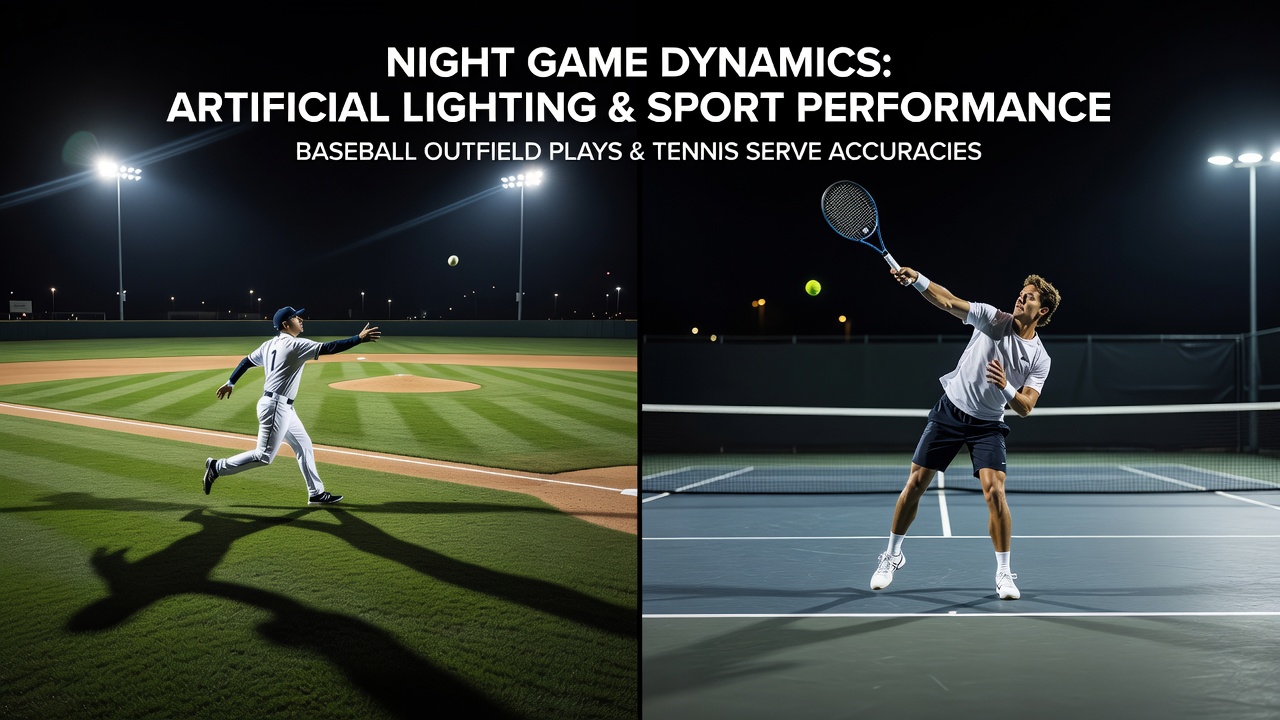
Artificial lighting transforms both baseball and tennis when the sun sets, and data from multiple leagues shows measurable shifts in player performance during evening contests. Researchers tracking MLB night games since the widespread adoption of LED systems in the 2010s have documented how light distribution affects depth perception and reaction times for outfielders, while similar patterns emerge on tennis courts where serve placement statistics fluctuate under floodlights.
Lighting Variables in Professional Baseball
Stadium illumination levels typically range from 150 to 300 foot-candles across the outfield, yet uneven coverage creates pockets where the ball exits the visible spectrum for fractions of a second. Studies conducted by the Society for American Baseball Research indicate that outfield error rates rise by approximately 8 percent in games starting after 7 p.m. compared with afternoon contests, primarily because players must adjust to the contrast between the bright ball and darker background areas near the warning track. Teams in venues with older metal-halide fixtures experience more pronounced effects, whereas facilities that upgraded to full-spectrum LEDs by 2024 report tighter clustering of tracking data in defensive metrics.
Shadows cast by the light poles themselves introduce additional variables, and outfielders often describe momentary blind spots when a fly ball passes through these zones. In July 2026, several clubs continue testing dynamic lighting arrays that dim and brighten specific sectors based on ball trajectory data collected from high-speed cameras, a development that builds on earlier experiments at retractable-roof stadiums.
Impact on Tennis Serve Mechanics Under Artificial Light
Tennis courts equipped for night play rely on overhead fixtures positioned at heights between 12 and 18 meters, producing vertical illuminance that must meet International Tennis Federation standards of at least 500 lux at the baseline. Serve accuracy measurements collected across ATP and WTA events reveal that first-serve percentages dip slightly during evening sessions, with placement shifting toward the body of the returner rather than the corners. This pattern appears consistently in matches played under metal-halide systems, where color rendering indices below 80 create subtle distortions in ball spin visibility.
Players adapt by shortening their toss height in many cases, a tactical adjustment documented in biomechanical analyses from the Australian Institute of Sport. The shorter arc reduces the time the ball spends in variable lighting zones near the top of the service motion, preserving the connection between visual input and racket contact. Venues that installed tunable LED arrays report more stable serve statistics across day and night sessions, suggesting that spectral consistency plays a larger role than raw brightness alone.
Comparative Data Across Both Sports
Both baseball and tennis involve rapid visual tracking of a small projectile against changing backgrounds, and lighting engineers note that the critical difference lies in the angle of approach. Outfield flies descend from high trajectories where the ball can disappear briefly against the dark sky above the light banks, whereas tennis serves travel on flatter paths that intersect multiple overlapping light cones. Research from the University of Waterloo sports engineering lab found that reaction time delays average 40 milliseconds longer under mixed lighting spectra, enough to alter the outcome of borderline catches or service returns.
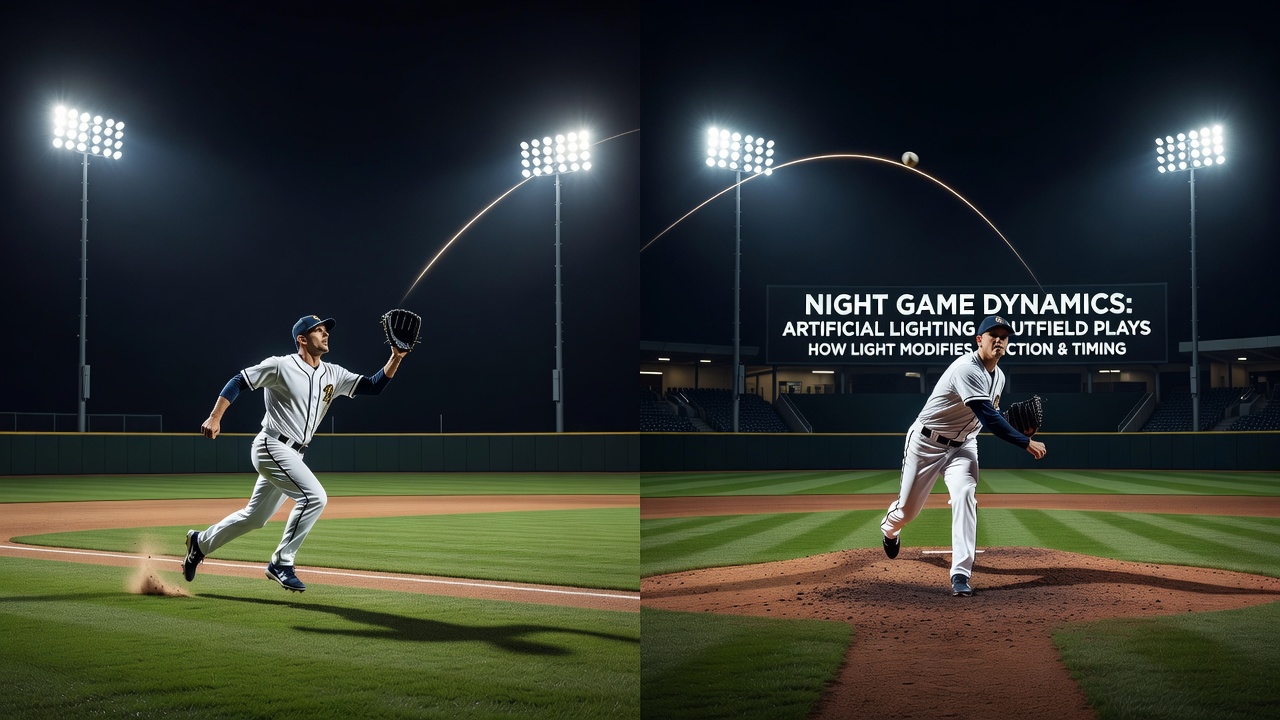
Coaches in both disciplines now incorporate lighting-specific drills during practice, including simulated low-contrast conditions and rapid light-level transitions. These sessions aim to recalibrate visual processing pathways that athletes rely on when artificial sources replace natural sunlight. Figures from the MLB Players Association health and safety reports show reduced complaints about night-game visibility after teams began using polarized eye protection calibrated for stadium spectra, while similar equipment appears with increasing frequency on professional tennis tours.
Technological Adjustments and Ongoing Developments
Facility operators continue refining lighting layouts to minimize glare at key decision points. In baseball this means directing beams away from the batter's eye line and the outfielders' primary tracking lanes, while tennis venues focus on even coverage across the service boxes and baselines. Data collected during the 2025 season indicated that venues completing these optimizations recorded fewer defensive miscues and higher serve percentages in night sessions than comparable sites without upgrades.
Wireless sensor networks now monitor real-time illuminance at multiple field locations, feeding information to control rooms that can adjust fixture output between innings or between sets. Observers tracking these systems note that the technology reduces variance in lighting conditions, yet residual effects tied to atmospheric moisture and fixture age persist across different climates.
Conclusion
Artificial lighting introduces consistent, quantifiable alterations to the visual demands of outfield defense in baseball and serve execution in tennis. Continued monitoring through high-speed tracking systems and player performance databases allows organizations to identify and mitigate these effects, while upgrades in fixture technology narrow the gap between day and night conditions. As leagues maintain packed summer schedules into July 2026 and beyond, the relationship between illumination design and athletic execution remains a central focus for equipment standards and training protocols across both sports.