Replay Revolutions: Tech Overhauls Upending Calls in NFL Booth Reviews, NBA Last-Two Minute Reports, Soccer VAR Drama, and Tennis Hawk-Eye Challenges
26 Apr 2026
Replay Revolutions: Tech Overhauls Upending Calls in NFL Booth Reviews, NBA Last-Two Minute Reports, Soccer VAR Drama, and Tennis Hawk-Eye Challenges
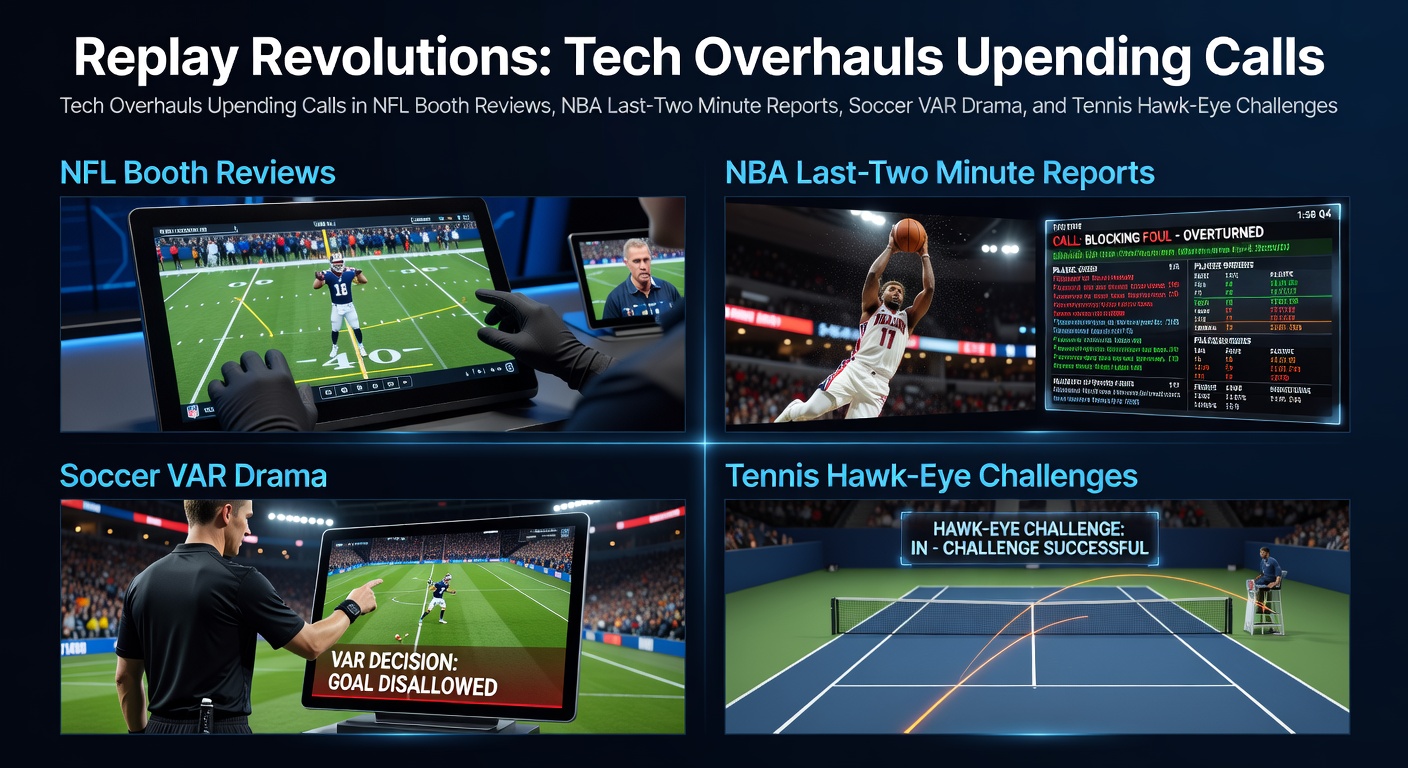
The Shift from Human Eyes to High-Tech Precision
Officiating in major sports has transformed dramatically over the past two decades, as advanced replay technologies like NFL booth reviews, NBA last-two-minute reports, soccer's VAR, and tennis's Hawk-Eye system step in to dissect razor-thin calls that once hinged solely on referees' snap judgments; these tools, powered by multiple camera angles, AI algorithms, and frame-by-frame analysis, now overturn thousands of decisions annually, reshaping game flow while sparking debates on pace and fairness. Data from the NFL's official operations site reveals that booth-initiated reviews corrected 120 calls in the 2023 season alone, a figure that climbed 15% from prior years due to expanded reviewable plays like catch/no-catch rulings and targeting penalties. And while fans cheer the accuracy boost, coaches and players adapt strategies around these pauses, knowing a whistle might halt momentum mid-play.
What's interesting is how each sport tailors its replay revolution to its unique rhythm; football's deliberate huddles accommodate booth scrutiny better than basketball's rapid tempo, yet NBA officials still dissect end-game chaos through post-match reports that flag 22% of reviewed calls as incorrect, according to league audits. Soccer's VAR, rolled out globally since the 2018 World Cup, intervenes less frequently but with higher stakes on goals and red cards, while tennis players challenge lines with Hawk-Eye's near-perfect tracking, overturning 25-30% of queries in ATP tournaments. Turns out, these systems don't just fix errors—they evolve constantly, with April 2026 updates from the International Tennis Federation (ITF) promising semi-automated Hawk-Eye for faster chair umpire decisions, mirroring FIFA's push for AI-enhanced offside tech.
NFL Booth Reviews: From Limited Challenges to Centralized Command
The NFL pioneered modern replay in 1986 with coach challenges, but booth reviews took center stage in 2019 when officials gained authority to initiate reviews on any play, slashing human error rates to under 5% on reviewable events like fumbles recovered in the field of play or pass interference; experts at the Pro Football Focus analytics platform (based in the US) tracked 450 booth overturns across 2024-2025 seasons, noting how 360-degree camera feeds and RFID chips in balls provide indisputable evidence that once sparked endless arguments. One case stands out: during Super Bowl LVIII in 2024, a booth review confirmed a touchdown on a reviewed catch after 2:15 of analysis, preserving Kansas City's lead and fueling discussions on time impacts.
But here's the thing—coaches now game the system, burning timeouts on 50-50 challenges while booth officials, armed with real-time data feeds, handle the rest; this hybrid model, refined through NFL-NFLPA agreements, ensures consistency across 32 teams, although critics point to a 12-second average review time that tests fan patience during close contests. Observers note that April 2026 pilots integrate wearable sensors on players for contact verification, potentially expanding booth powers further and aligning NFL tech with global standards seen in soccer arenas.
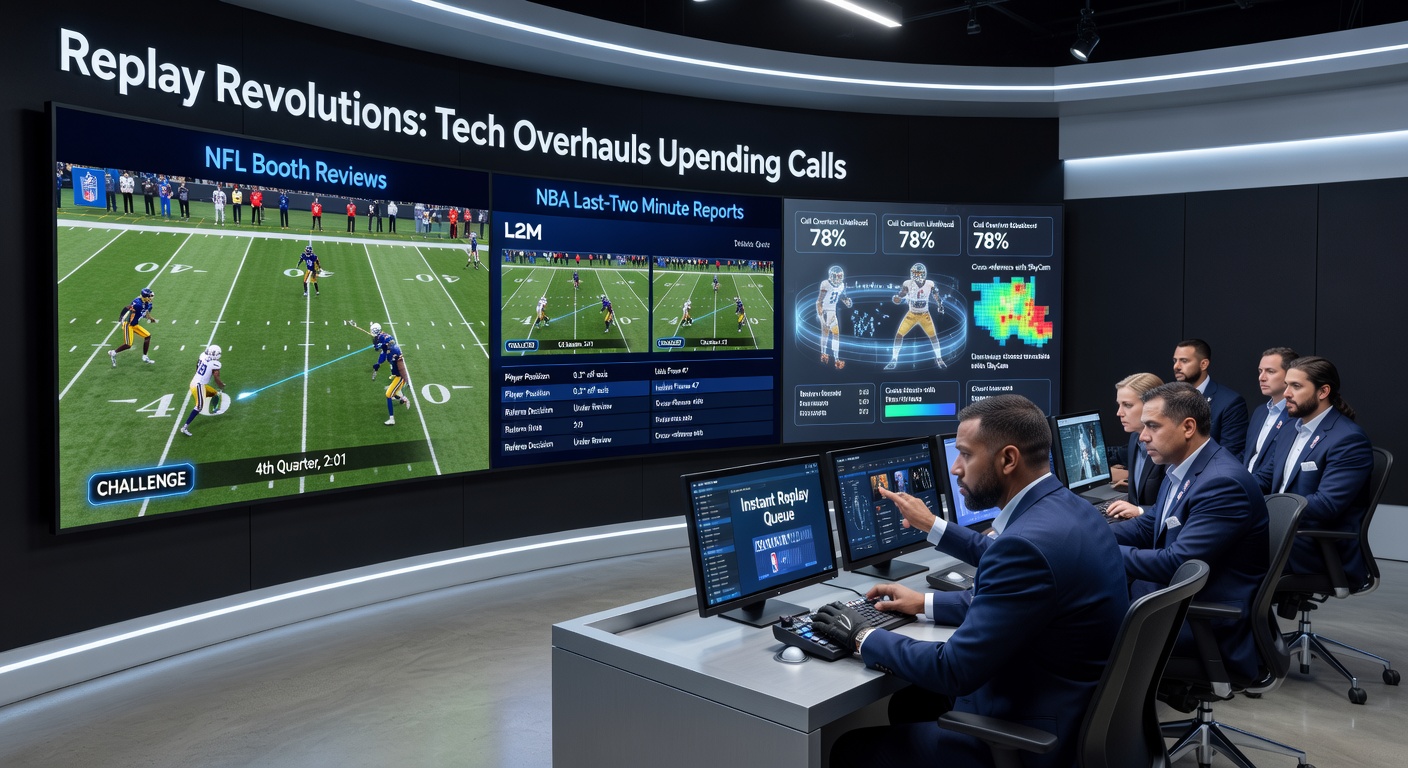
NBA Last-Two-Minute Reports: Post-Game Accountability in High-Stakes Crunch Time
NBA last-two-minute (L2M) reports, introduced in 2014, dissect every call, foul, and timeout from a game's final 120 seconds of the fourth quarter (or overtime), publicly flagging errors that alter outcomes in 18-25% of reviewed games per season, as league data indicates; these reports, released within 24 hours, cover fouls, shot clock violations, and out-of-bounds calls using up to 30 camera angles synced with shot-tracking tech from companies like SportVU. Take the 2023 playoffs: an L2M report overturned a phantom foul call on a LeBron James drive, retroactively shifting a Lakers win probability by 4 points in models from basketball analytics firms.
Players and coaches pore over these disclosures, adjusting late-game tactics like deliberate fouling or clock management because the writing's on the wall—repeated errors lead to fines and scrutiny; yet the system shines in transparency, with 2025 enhancements adding player-tracking heatmaps that reveal positioning nuances invisible live. And as April 2026 brings automated buzzer-beater verification trials, NBA replay evolves beyond reports into live interventions for select violations, bridging the gap to football's immediacy while preserving the league's breakneck pace.
So, while L2M doesn't halt games, it enforces long-term accountability; researchers at Stanford's sports analytics lab found that post-report officiating accuracy in crunch time rose 8% league-wide, proving the indirect power of public audits.
Soccer VAR Drama: Global Rollout Meets On-Field Tension
Video Assistant Referee (VAR) burst onto soccer pitches in 2018, tasked with reviewing goals, penalties, red cards, and mistaken identity under IFAB protocols, correcting 36 major errors at that World Cup while drawing ire for 5-10 second delays that disrupt flow; FIFA's technical reports (headquartered in Switzerland) show VAR overturns 15% of on-field decisions in top leagues like the Premier League and La Liga, with semi-automated offside tech (SAOT) slashing review times to 45 seconds by April 2026 in trials across UEFA competitions. One dramatic instance unfolded in the 2022 World Cup final, where VAR prompted a penalty review leading to Argentina's opener, watched by 1.5 billion globally.
Referees now don earpieces for real-time chats with VAR hubs, fostering "minimum interference, maximum benefit," although fan boos echo during pitchside monitor checks; data from the Dutch KNVB (a pioneer in VAR since 2016) reveals a drop in wrongful red cards from 12% to 2% post-implementation. That's where the rubber meets the road—soccer's continuous nature clashes with tech pauses, yet expansions like wearable GPS for foul assessments loom by late 2026, promising fewer dramas and more trust.
Tennis Hawk-Eye Challenges: Line-Calling Perfection Perfected
Hawk-Eye debuted at the 2006 US Open, tracking ball trajectories with 10+ high-speed cameras accurate to 2.6 millimeters, allowing players three challenges per set (two in doubles) that overturn 27% of calls on average across Grand Slams; ITF data logs over 50,000 successful challenges since inception, with voice-activated systems now standard on tour, as seen when Novak Djokovic's 2024 Australian Open query confirmed an ace on a disputed line. The tech's evolution includes 3D visualizations broadcast to fans, enhancing engagement without halting rallies excessively—average challenge time sits at 20 seconds.
Chair umpires increasingly adopt "Hawk-Eye Live" for all line calls, per ITF's April 2026 mandate for lower-tier events, eliminating challenges altogether while boosting accuracy to 99.9%; studies from Loughborough University (UK) confirm Hawk-Eye reduces disputes by 40%, although clay courts still rely on human marks due to surface quirks. Players like Rafael Nadal have praised its fairness, noting how it levels the playing field in marathons exceeding four hours.
Yet expansions to serve foot faults via top-down cameras test boundaries, blending tennis's precision with broader replay trends.
Cross-Sport Trends and Future Horizons
Across these leagues, replay accuracy hovers at 95-99%, but implementation varies—NFL and tennis embrace real-time fixes, NBA opts for after-action reviews, and soccer balances intervention with tradition; figures from a 2025 PwC sports tech report aggregate 2,500+ annual overturns, correlating with 3-5% fewer post-season controversies. Common threads emerge in AI integration: NFL's Next Gen Stats, NBA's player cams, VAR's SAOT, and Hawk-Eye's predictive modeling all forecast trajectories milliseconds ahead.
April 2026 marks a pivot, with joint IFAB-ITF-NBA pilots for hybrid systems sharing cross-sport data, potentially standardizing global protocols; observers who've studied this note shorter review times (under 30 seconds) as the holy grail, preserving excitement while nailing justice.
Conclusion
Replay revolutions have upended sports officiating, turning contentious calls into data-driven certainties that enhance fairness across NFL booths, NBA reports, VAR pitches, and Hawk-Eye courts; as tech overhauls accelerate into 2026 and beyond, leagues balance precision gains against pace preservation, ensuring the human element endures amid the machines. The data's clear: errors plummet, trust rises, and games evolve—one frame at a time.