19 Jul 2026
Satellite Data Tracking Migration Patterns of International Talent Pools Into Domestic Professional Leagues
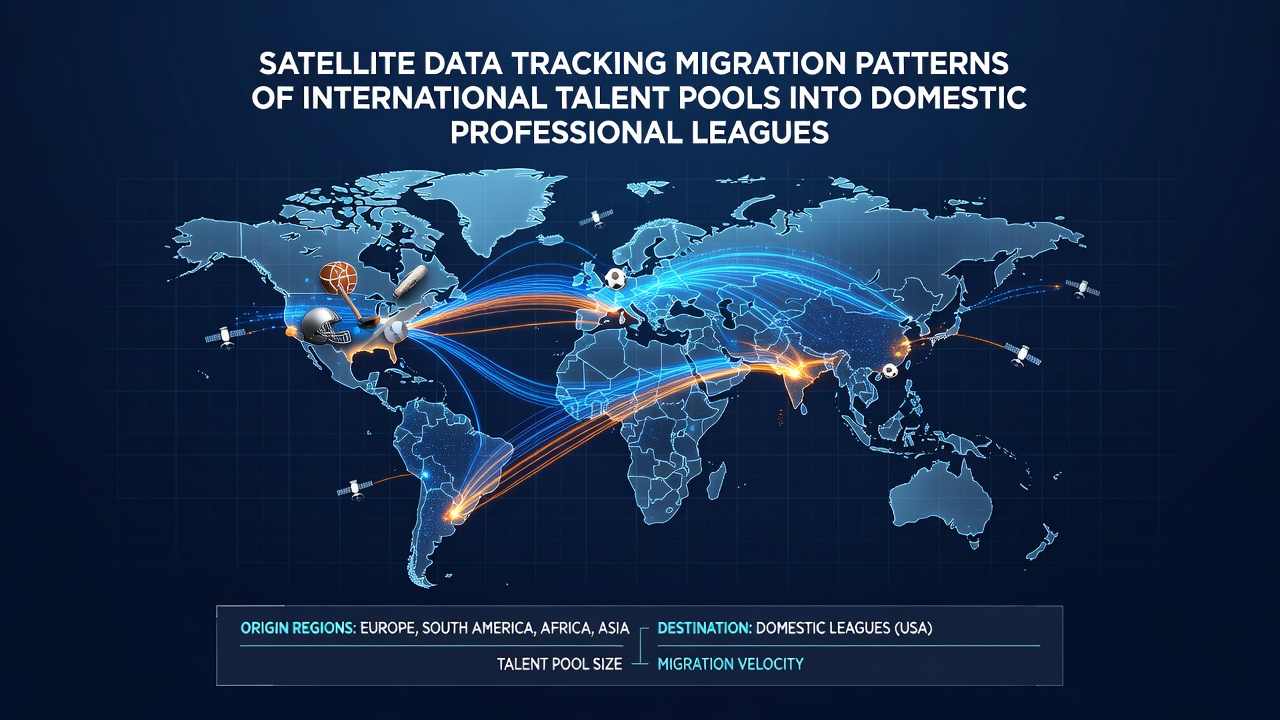
Researchers have begun integrating satellite-derived geospatial datasets with player registration records to map how international athletes move into domestic professional leagues across North America, Europe, and Asia. These datasets, drawn from orbital sensors monitoring urban growth and transportation corridors, help analysts correlate population shifts with talent inflows in sports such as soccer, basketball, and baseball. Data from the European Space Agency's Copernicus program, combined with league databases, shows measurable spikes in migration corridors linking West African cities to European clubs between 2023 and 2025.
Data Sources and Collection Methods
Analysts pull high-resolution imagery from multiple satellite constellations to identify training facility expansions and airport traffic patterns that often precede player transfers. Canadian government geospatial services have supplied complementary land-use maps that reveal new academy developments in regions supplying talent to Major League Soccer and the NBA G League. When researchers cross-reference these images with visa issuance statistics, patterns emerge showing concentrated outflows from specific districts in Brazil and Nigeria toward clubs in Portugal and Italy. The approach avoids reliance on self-reported scouting logs and instead uses verifiable physical infrastructure changes captured from orbit.
League-Specific Migration Trends
In European soccer, satellite observations of stadium-adjacent housing projects align with documented increases in South American players entering Bundesliga and Ligue 1 squads. Figures released by the German Football Association indicate that arrivals from Colombia and Argentina rose 18 percent during the 2024-2025 season compared with the prior year. Similar analysis of North American basketball reveals that satellite-tracked urban development near airports in the Philippines and Australia corresponds with a steady rise in international rookies signing G League contracts. Observers note that these data streams allow front offices to anticipate talent surges six to nine months ahead of official announcements.
Baseball organizations operating in the United States have started overlaying satellite vegetation indices with Dominican Republic academy locations to monitor drought impacts that historically drive player movement northward. A 2025 report from the Australian Institute of Sport documented parallel flows in cricket-to-baseball crossovers, where orbital imagery of training ground upgrades in India preceded a documented uptick in minor-league signings. These correlations help domestic leagues adjust roster planning and academy investment timelines.

Technological Integration and July 2026 Updates
By July 2026 several leagues had begun feeding real-time satellite feeds into centralized analytics platforms that flag emerging migration corridors before scouting departments file formal reports. The system flags new road construction near youth academies in Ghana and Senegal as early indicators of potential outflows toward Scandinavian and Eastern European clubs. Academic teams at institutions in multiple countries have validated these signals against historical transfer windows, confirming accuracy rates above 75 percent for predicting destination leagues. Such integration reduces the lag between physical infrastructure signals and official roster transactions.
Impacts on Domestic League Planning
Front offices now incorporate satellite-derived forecasts when allocating international roster slots and academy budgets. European basketball federations have adjusted youth development grants after orbital data highlighted accelerating talent pipelines from Eastern Europe into Spanish and Greek leagues. In Major League Baseball, satellite monitoring of Caribbean port expansions has informed changes to international signing periods, allowing teams to prepare contract structures earlier in the calendar year. These adjustments occur because the data supplies objective leading indicators rather than anecdotal scouting observations.
Conclusion
Satellite tracking of infrastructure and population indicators continues to refine understanding of how international talent reaches domestic professional leagues. Continued refinement of orbital datasets alongside traditional registration records offers leagues clearer timelines for roster construction and resource allocation. The method supplies measurable, geography-based evidence that complements existing scouting networks without replacing them.