27 May 2026
Tech Tool Borrowings: Golf Launch Monitors Refining Precision in Tennis Serves and Basketball Shooting Mechanics
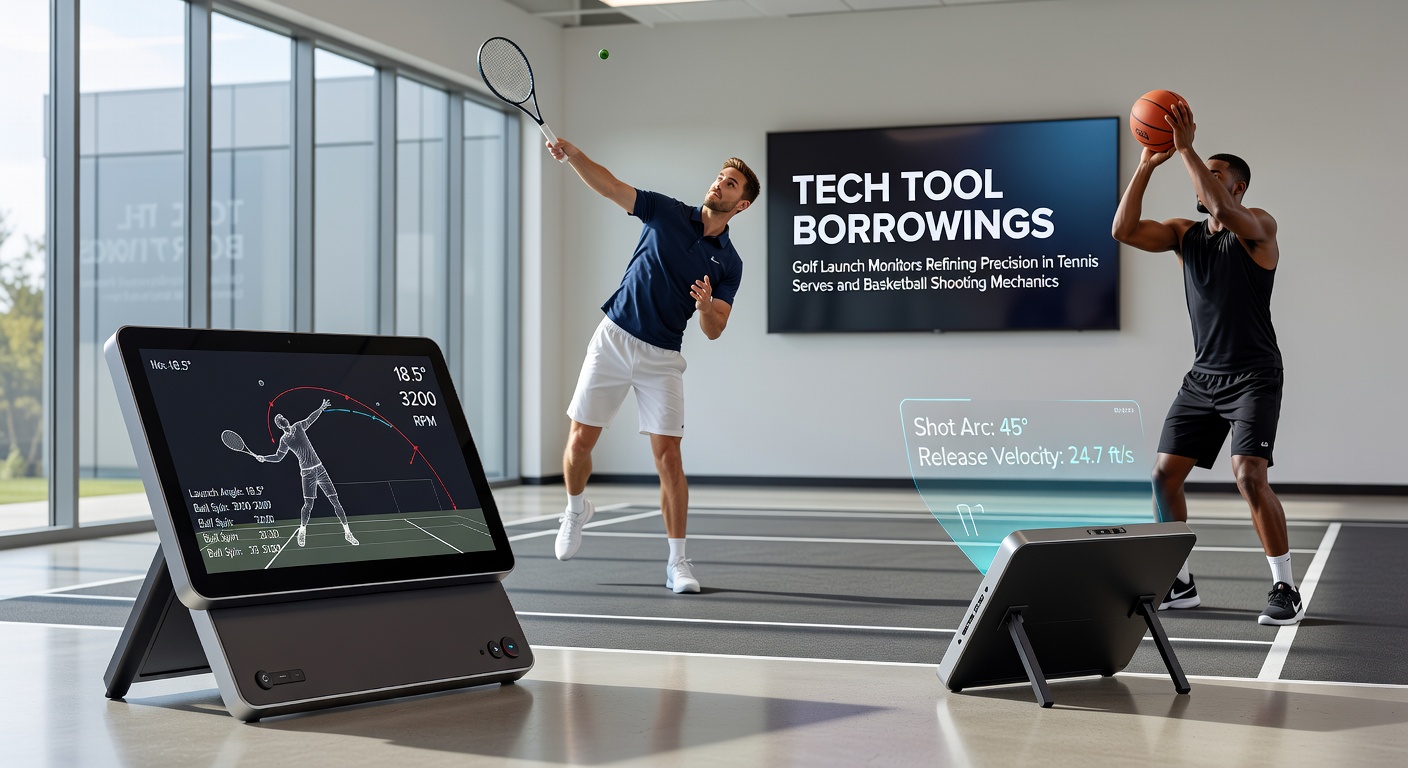
Technology originally developed for golf swing analysis has found new applications in tennis and basketball training programs across multiple continents since early 2025, and observers note continued expansion through May 2026. Devices such as TrackMan and FlightScope systems measure ball flight parameters including launch angle, spin rate, and velocity with radar and camera integration, allowing coaches to quantify mechanics that previously relied on visual observation alone. Researchers at institutions in North America and Europe have documented transfers of these tools to court sports where similar projectile dynamics apply.
Core Measurement Capabilities
Golf launch monitors track club head speed alongside ball metrics such as sidespin and backspin through Doppler radar combined with high-speed imaging, and the same sensors capture equivalent data when athletes strike tennis balls or release basketballs. Studies from the Australian Institute of Sport indicate that spin rates exceeding 3000 revolutions per minute in tennis serves correlate with specific racket path angles, while basketball shot release data shows optimal backspin between 120 and 180 revolutions per minute for rim-friendly trajectories. These figures come from controlled testing environments where athletes perform repeated motions under consistent conditions.
Adaptation in Tennis Training
Tennis academies in Florida and Spain began integrating portable launch monitors into serve development sessions by mid-2025, focusing on consistency of ball trajectory and spin axis. One program affiliated with the International Tennis Federation reported measurable reductions in double-fault percentages among junior players after six weeks of data-guided adjustments to toss height and racket face angle. The systems provide immediate feedback on whether serves land within target zones by calculating projected bounce points based on initial velocity and spin, which helps players refine placement without requiring full court setups during every drill.
Coaches adjust training protocols when monitor readouts reveal excessive sidespin that pulls serves wide, and they cross-reference these readings with video footage to isolate joint angles at contact. Data collected during European training camps in spring 2026 showed average serve speeds increasing by 4 to 7 kilometers per hour among participants who used monitor feedback compared with control groups relying on traditional coaching cues.
Applications for Basketball Shooting
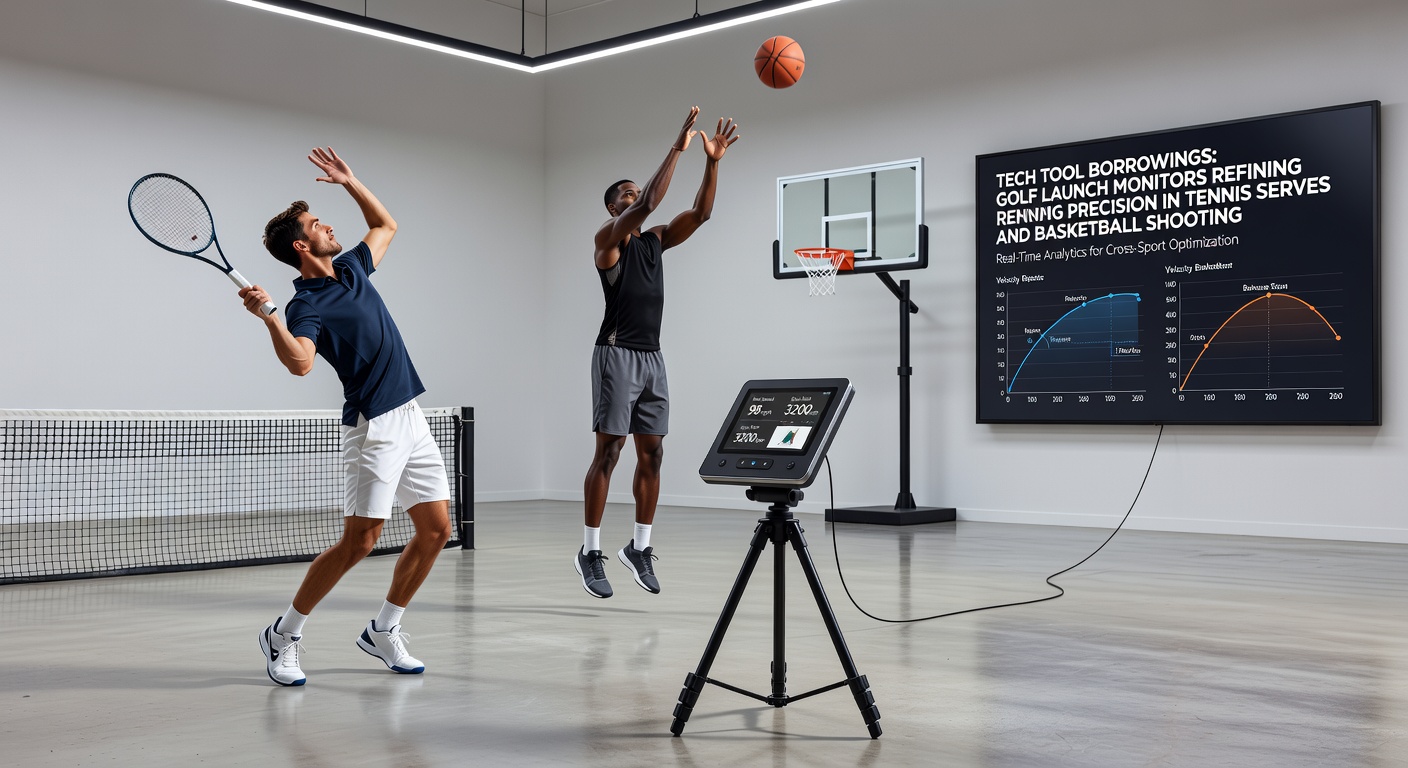
Basketball development programs in Canada and the United States adopted similar sensor arrays to examine release mechanics, particularly for three-point attempts where arc height and entry angle determine success rates. Monitors positioned behind the shooter record ball rotation and velocity at release, revealing patterns such as inconsistent backspin that cause shots to fall short. A 2025 report from the University of British Columbia documented how players who reviewed launch data weekly improved their effective field goal percentage by adjusting elbow positioning and follow-through wrist snap.
Training facilities now combine monitor output with force plate measurements to assess how lower body drive influences upper body release consistency, and this integrated approach gained traction among NCAA programs preparing for the 2025-2026 season. Observers note that portable versions allow road teams to maintain data collection during away games rather than relying solely on home facility equipment.
Research and Implementation Trends
Academic papers published in 2025 through the Journal of Sports Sciences examined cross-sport transfer validity, confirming that golf-derived algorithms for spin measurement apply accurately to tennis and basketball projectiles when calibrated for different ball masses and sizes. Equipment manufacturers released firmware updates in early 2026 that included sport-specific presets for tennis racket impact detection and basketball rim interaction modeling. Professional teams in the NBA and ATP circuits have incorporated these tools into offseason regimens, though widespread adoption at lower competitive levels remains limited by equipment costs.
International governing bodies including the International Basketball Federation have referenced sensor data in coaching education modules released during May 2026, emphasizing objective metrics over subjective feel. Training centers in Asia and Oceania report similar experiments with borrowed systems, often sharing datasets through collaborative research networks to refine predictive models for shot success probabilities.
Conclusion
Launch monitor technology continues migrating from golf origins into tennis and basketball environments as measurement precision improves and software interfaces simplify for non-specialist coaches. Evidence from multiple research centers demonstrates repeatable gains in mechanical consistency when athletes receive quantified feedback on launch parameters. Continued hardware miniaturization and algorithm refinement through 2026 support broader access across developmental programs worldwide.