24 Jun 2026
Tracing Athlete Sleep Pattern Disruptions Across Multi-Timezone Baseball Road Trips and International Soccer Tours
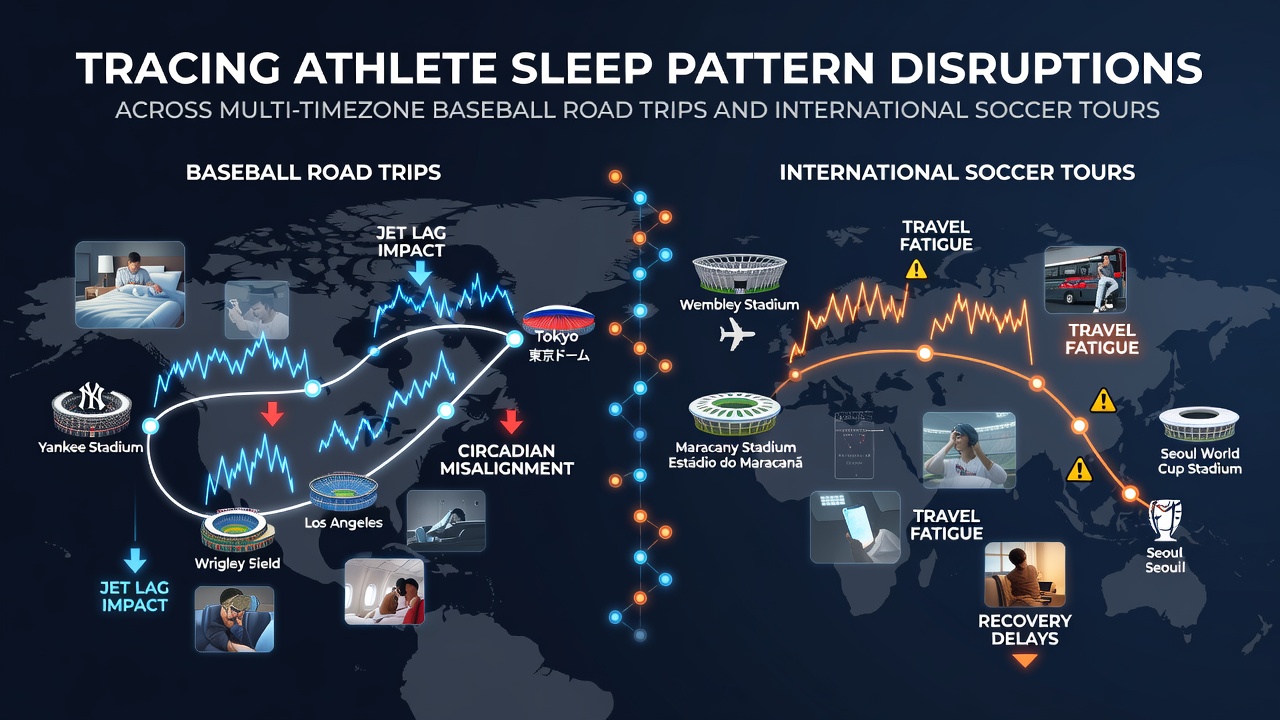
Baseball players crisscrossing North American time zones and soccer squads jetting between continents face measurable shifts in their rest cycles, with studies tracking how these patterns unfold over weeks of competition. Data from team monitoring programs show that rapid eastward or westward movement alters melatonin release and core body temperature rhythms, leading to fragmented sleep that can persist for several days after arrival. Observers note that MLB clubs often log 15 to 20 flights per season when playing coast-to-coast series, while European soccer sides completing pre-season tours or qualification matches encounter even longer hauls that compound the effect.
Time Zone Shifts and Physiological Responses
Research conducted by sports science groups indicates athletes lose approximately one hour of effective sleep per time zone crossed when schedules force immediate training or game preparation. The body’s internal clock requires roughly one day to adjust for each hour of difference, yet baseball road trips frequently compress recovery windows because teams play every night and travel overnight. Soccer tours add another layer when squads move from European evenings to Asian or Australian mornings, forcing training sessions into local daylight hours that clash with natural circadian dips.
MLB Road Trip Patterns
Teams traveling from the Eastern Time Zone to the Pacific Time Zone, for instance, encounter a three-hour delay that pushes game start times later relative to players’ internal clocks. Performance logs compiled during the 2025 season revealed that visiting clubs recorded higher rates of delayed sleep onset on the first two nights after arrival, with some players reporting wake times shifted by as much as four hours. And because June 2026 will see multiple interleague series scheduled across four time zones in quick succession, analysts expect similar disruptions to surface again when clubs prepare for the expanded schedule.
But here’s the thing: recovery protocols vary widely. Some organizations deploy light therapy boxes in hotel rooms and enforce strict room-darkening measures, while others rely on individualized sleep tracking via wearable devices that flag when REM cycles fall below baseline. Figures released by the MLB Players Association show that teams using structured sleep hygiene programs reported fewer instances of daytime fatigue during the second half of extended road swings.
International Soccer Travel Demands
Soccer players crossing multiple continents encounter larger time shifts that stretch beyond the six-hour threshold where jet lag symptoms become pronounced. During the 2025 international calendar, several Premier League clubs completed tours to the United States and Asia within a three-week window, resulting in documented reductions in total sleep time of 90 to 120 minutes per night for the first four days. Researchers from the European College of Sport Science tracked heart-rate variability and found elevated stress markers persisting until the sixth day after arrival in some cases.
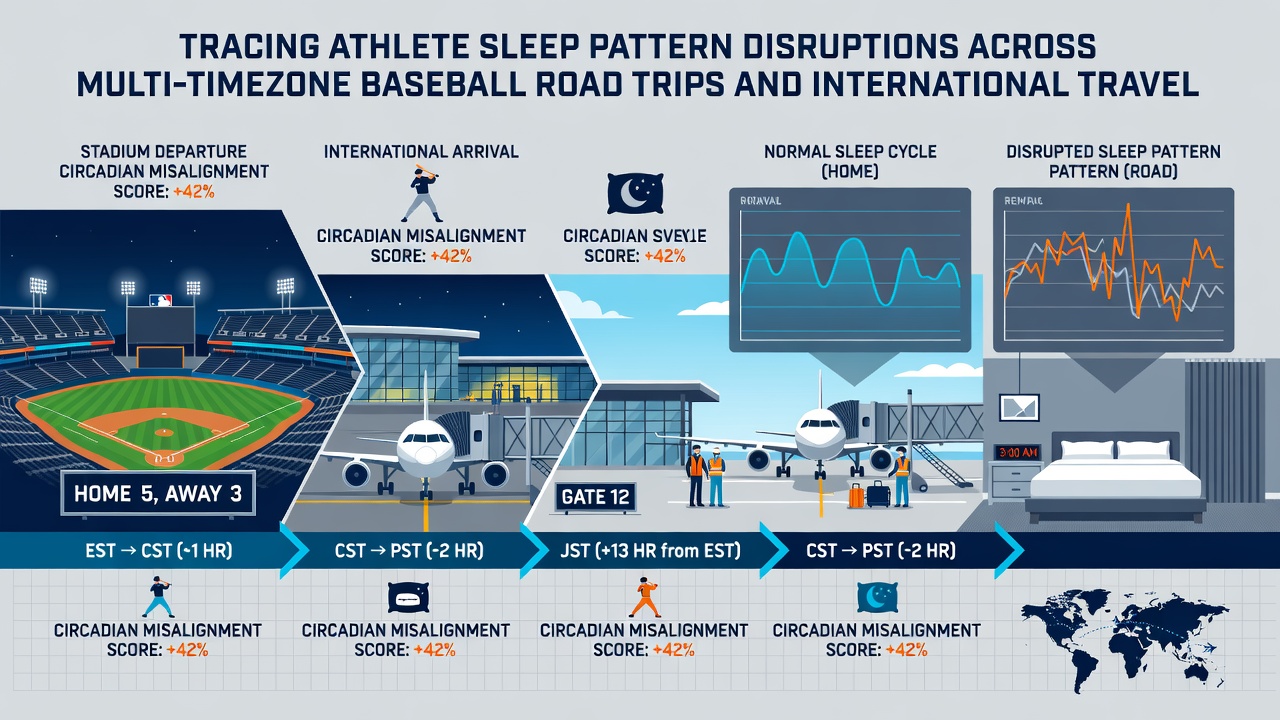
Those preparing for the FIFA World Cup in June 2026 already face preliminary qualification matches that require travel from South America to Europe and back within short turnaround periods. Data collected during prior tournaments show that squads crossing eight or more time zones experienced measurable drops in high-intensity running metrics until sleep patterns stabilized. National federations have begun incorporating sleep coaches who design pre-travel phase-shift plans, gradually advancing or delaying bedtime over several days before departure.
Monitoring Technologies and Recovery Strategies
Wearable sensors now supply granular information on sleep stages, allowing medical staff to identify when an athlete’s total sleep time drops below seven hours for consecutive nights. Teams in both baseball and soccer combine this information with travel logistics to decide whether to arrive earlier or adjust training loads upon landing. One study published through the Australian Institute of Sport examined soccer players on a 12-hour westward journey and noted that those who followed a pre-flight melatonin and light-exposure schedule regained baseline sleep efficiency faster than control groups.
Coaches and support staff also coordinate meal timing and caffeine cutoffs to reinforce new circadian cues. Evidence from these interventions suggests that consistent routines reduce the duration of sleep disruption, although complete adaptation rarely occurs before the next fixture when schedules remain packed. Observers tracking both sports note that younger athletes sometimes adapt more quickly, yet they still register elevated fatigue scores during the initial adjustment window.
Comparative Insights Across Disciplines
Baseball’s domestic focus creates shorter but more frequent time-zone crossings, while soccer’s global calendar produces longer single trips that demand extended recovery blocks. Both patterns produce similar downstream effects on reaction time and mood regulation, according to aggregated performance datasets. What’s interesting is how organizations in different regions address the issue: North American baseball clubs emphasize in-flight sleep optimization, whereas many European soccer sides prioritize post-arrival light management and scheduled naps aligned with the new time zone.
June 2026 will test these approaches on a larger scale when World Cup squads and MLB teams navigate overlapping travel demands. Continued collection of sleep metrics across both sports will likely refine best-practice guidelines that traveling athletes can apply regardless of destination.
Conclusion
Tracking sleep disruptions during multi-timezone baseball road trips and international soccer tours reveals consistent physiological patterns that teams now monitor with increasing precision. Data gathered through wearable technology and structured interventions demonstrate that proactive timing of light exposure, meals, and rest windows can shorten the adjustment period. As calendars grow more demanding ahead of major 2026 events, these methods will continue to shape how organizations prepare athletes for the realities of long-distance competition.