22 May 2026
Virtual Reality Drills Reshaping Precision Skills for Rookies Entering Professional Ranks in Court Sports and Field Events
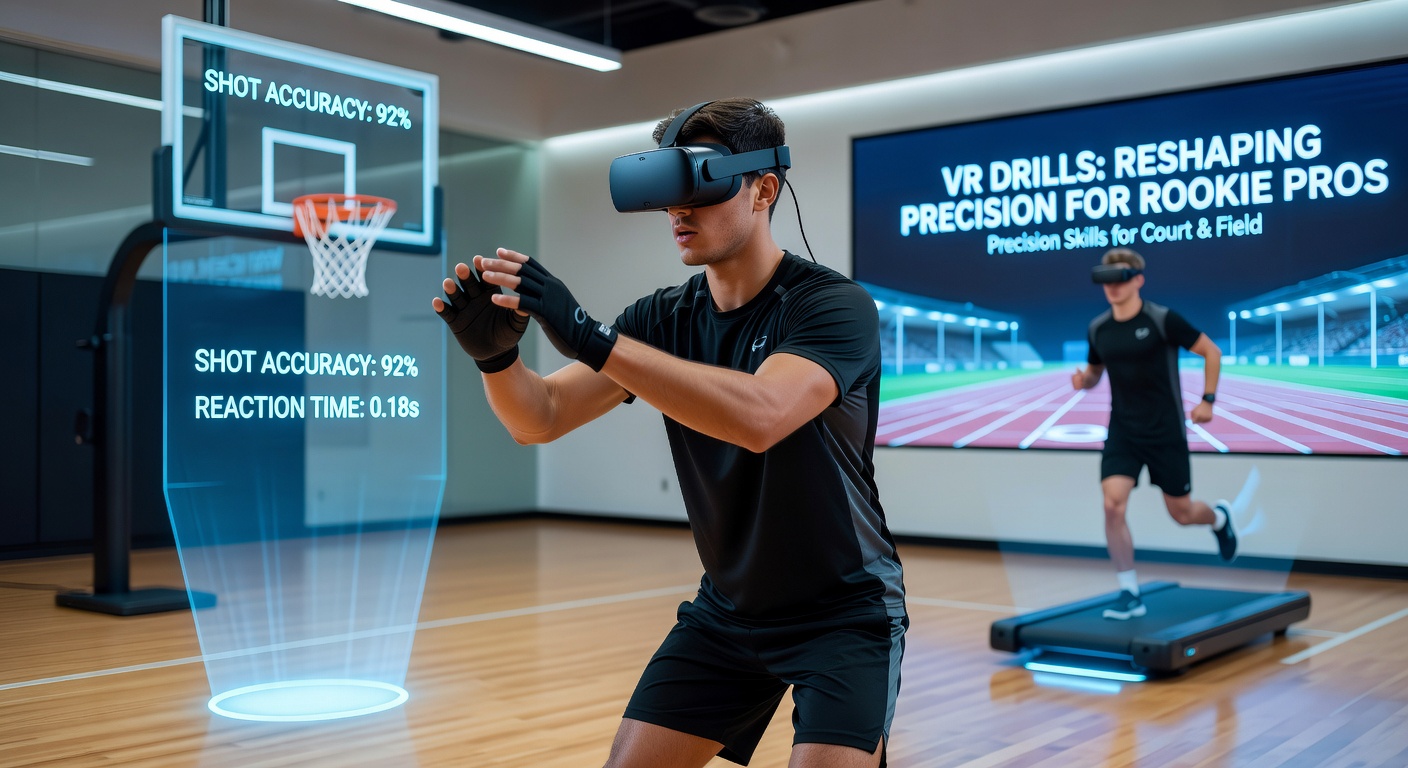
Virtual reality drills have become a standard component in training programs for athletes transitioning into professional court sports and field events, where precision determines outcomes in serves, shots, throws and jumps. Programs in basketball, tennis, volleyball and track and field now integrate VR simulations that replicate match conditions with measurable accuracy metrics, allowing rookies to refine motor skills before they face live competition. Data from multiple professional leagues shows consistent use of these tools since 2023, with adoption rates climbing as hardware costs decrease and software improves tracking capabilities.
In May 2026 several NBA franchises and European tennis academies expanded their VR protocols after reviewing performance logs from the previous season. Rookies entering these ranks complete targeted sessions that focus on spatial awareness, release timing and trajectory prediction, elements that traditional drills often cannot isolate with the same repeatability. Researchers at institutions across North America and Australia have documented gains in shot accuracy and serve consistency when athletes combine VR practice with on-court repetition, though results vary by individual adaptation speed.
Core Mechanics of VR Precision Training
Systems project three-dimensional environments that mirror specific venues, from indoor arenas with variable lighting to outdoor tracks affected by wind patterns. Athletes wear headsets equipped with motion sensors while performing repetitive actions such as free throws, tennis serves or javelin approaches, and the software records joint angles, release points and follow-through consistency. Feedback appears instantly on connected displays, highlighting deviations that coaches then address through adjusted cueing. This loop replaces hours of less focused repetition because each virtual attempt provides quantifiable data rather than subjective observation alone.
One study conducted at the University of Queensland tracked thirty-two rookie athletes across basketball and athletics programs over six months, finding average improvements of 14 percent in precision metrics for those who logged at least three VR sessions weekly. The same cohort showed reduced variability in release timing compared with peers who trained exclusively through conventional methods. Similar patterns appear in reports compiled by the Australian Institute of Sport, where field-event throwers used VR to practice under simulated gust conditions before actual competitions.
Application Across Court Sports and Field Events
Basketball organizations have incorporated VR modules that simulate defensive closeouts and contested shooting angles, helping rookies develop court vision without the physical toll of full-contact scrimmages. Tennis federations deploy comparable setups for serve placement and return anticipation, projecting opponent movements drawn from match databases. In field events, discus and shot-put athletes rehearse rotational sequences inside virtual stadiums that adjust for crowd noise and runway textures, factors that influence focus during actual meets.
Volleyball programs have adopted the technology for setting and attacking precision, particularly useful for players moving from collegiate to professional levels where tempo changes rapidly. Observers note that these simulations allow repeated exposure to high-pressure scenarios, such as match-point serves or final-round throws, without scheduling constraints or weather interruptions that affect outdoor sessions.
Integration with Traditional Coaching and Recovery Protocols
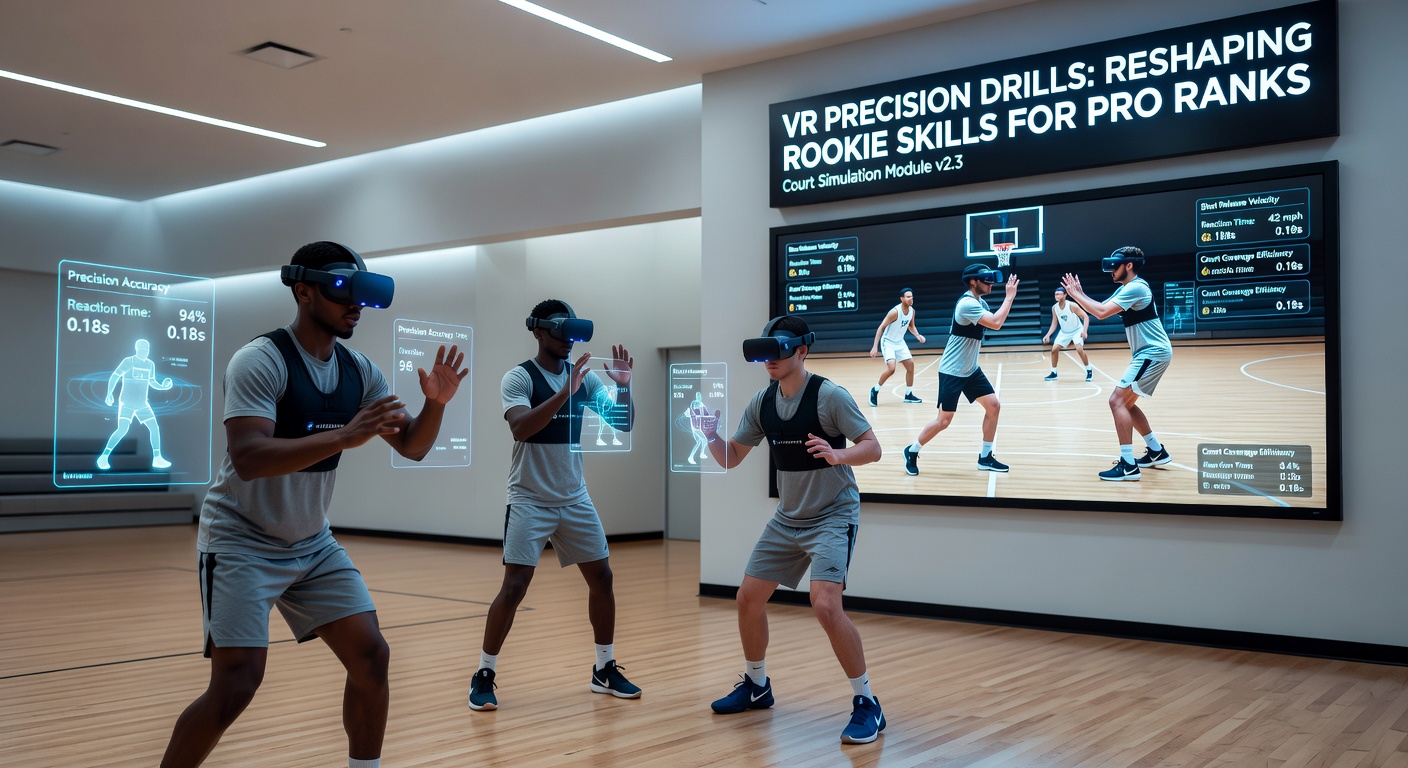
Coaches combine VR output with biomechanical analysis from wearable sensors and video review, creating individualized plans that address both technical flaws and decision-making speed. Recovery considerations also factor in, since VR sessions generate lower impact loads than equivalent live repetitions while still activating neural pathways associated with skill execution. Teams schedule these drills during lighter training blocks, particularly in the lead-up to draft combines or pre-season camps when rookies must demonstrate readiness across multiple skill domains.
Leagues have begun sharing anonymized datasets to refine simulation algorithms, drawing on contributions from organizations such as the National Collegiate Athletic Association and the European Athletics Association. These collaborations help standardize measurement criteria so that precision benchmarks translate across different sports and geographic regions. Rookies who enter professional ranks after exposure to such integrated programs often require fewer adjustment periods when translating practice gains into game situations.
Challenges and Ongoing Developments
Implementation requires investment in compatible hardware and staff training, which smaller academies and emerging programs sometimes lack. Motion-capture accuracy can vary with lighting conditions or athlete body types, prompting continued software updates that incorporate machine-learning corrections. Despite these hurdles, usage continues to expand because the technology provides scalable repetition that physical facilities alone cannot match during congested schedules.
By mid-2026 developers introduced multi-user VR environments that allow rookies to practice against simulated professional opponents drawn from historical performance data. This addition addresses tactical decision elements alongside pure motor precision, further bridging the gap between training and competition demands.
Conclusion
Virtual reality drills now form a documented part of preparation pathways for rookies in court sports and field events, supplying repeatable, data-rich environments that target specific precision components. Performance records from multiple leagues and research groups indicate measurable skill improvements when these sessions supplement traditional training. As hardware accessibility grows and simulation fidelity increases, the approach is expected to remain embedded in professional development structures across regions.