17 May 2026
Wind Currents Reshaping Play Patterns in Open-Air Football and Baseball Venues
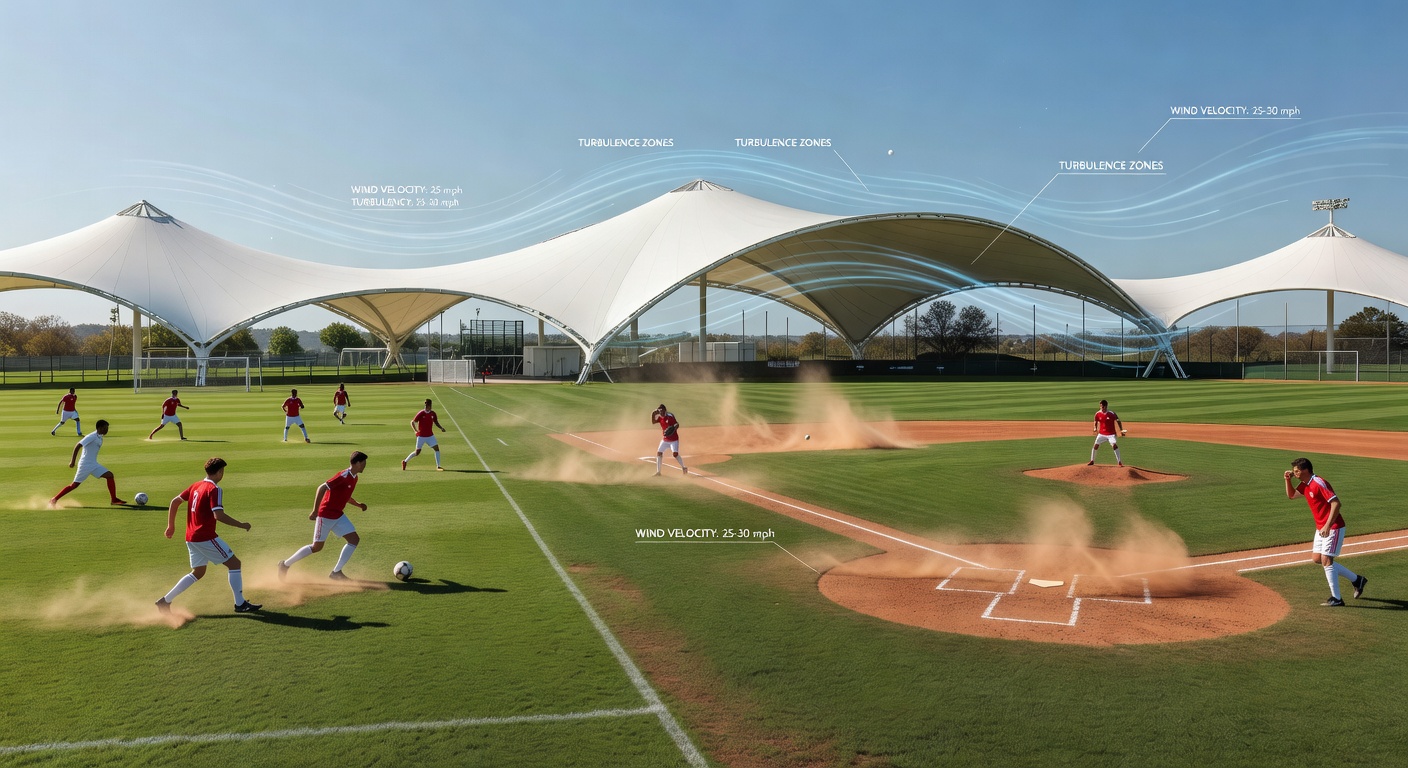
Stadiums without domes expose players and equipment to shifting air flows that alter ball paths in measurable ways, and data collected across major league venues shows consistent adjustments in strategy during breezy conditions. Researchers tracking trajectories in facilities like Wrigley Field and Lambeau Field note how gusts above 10 miles per hour push fly balls farther or shorter depending on direction, while similar forces influence long passes and kicks in football settings. Studies from the National Oceanic and Atmospheric Administration have documented these patterns over multiple seasons, revealing that venues oriented north-south often experience crosswinds that complicate outfield defense and punting angles alike.
Baseball provides clear examples of these dynamics because the ball travels slower than in many other sports yet remains highly sensitive to drag and lift forces. In May 2026 observers recorded elevated home run totals at certain coastal parks during afternoon games when prevailing winds aligned with the batter's pull side, and statisticians linked those spikes directly to sustained tailwinds rather than changes in bat speed or pitch selection. Pitchers meanwhile adapt breaking ball grips to counteract lateral movement caused by swirling currents near the mound, a technique refined through repeated exposure at sites such as Oracle Park where consistent sea breezes create predictable but demanding variables.
Baseball Venues and Air Flow Interactions
Outfield positioning shifts noticeably when wind speeds exceed typical thresholds, with center fielders moving several steps toward the lines in strong right-to-left flows that carry balls toward the gap. Data compiled by league tracking systems indicates that teams in windy divisions convert fewer fly balls into outs during such periods, prompting managers to emphasize line-drive contact over lofted swings. One long-running analysis of Fenway Park conditions demonstrated that the Green Monster wall interacts with upward gusts to produce unusual rebounds, turning potential home runs into playable caroms that favor agile left fielders familiar with the venue's quirks.
Players and coaches prepare by monitoring real-time anemometer readings installed above teh stands, allowing in-game tweaks to defensive alignments before each half-inning. These preparations have become standard practice at multiple National League ballparks where historical records show wind-related error rates rising sharply above 15 miles per hour. Equipment choices also reflect the environment, as pitchers select seam orientations that stabilize spin against headwinds while hitters time swings to exploit tailwind assistance on certain pitch counts.
Football Field Dynamics Under Variable Winds
Open-air football stadiums present parallel challenges for specialists handling kicks and passes that travel farther and higher than baseball trajectories. Field goal attempts from beyond 45 yards show measurable deviation when crosswinds exceed 8 miles per hour, prompting kickers to aim wider on one side of the uprights to compensate. Researchers at institutions studying sports aerodynamics have quantified how punters alter hang time targets in headwind situations, trading distance for control to keep returns inside the 20-yard line more reliably.

Quarterbacks face added complexity when throwing into or across prevailing flows, with deep routes requiring earlier releases and adjusted arcs to maintain completion percentages. Play callers in the AFC North have incorporated wind forecasts into weekly game plans for years, favoring shorter timing routes and screen concepts when gusts are forecast during afternoon kickoffs. Linebackers and defensive backs meanwhile read ball flight differently under these conditions, closing passing lanes with greater urgency because passes hang longer or dip unexpectedly.
Stadium architecture influences these effects, as structures with partial upper decks create swirling eddies near the goal lines that can magnify or cancel ambient winds. Maintenance crews at venues such as Soldier Field adjust turf heights seasonally to reduce additional drag on rolling balls during windy contests, while scoreboard operators display live wind data for fans and broadcasters tracking game flow.
Shared Patterns Across Both Sports
Both baseball and football benefit from meteorological integration into training regimens, where athletes simulate wind effects using fans and trajectory software during practice sessions. League-wide statistics released in early 2026 highlighted a correlation between elevated wind variance at open venues and increased use of conservative play-calling in late-season games, particularly when teams protect slim leads. Equipment manufacturers have responded by developing balls with modified surface textures that reduce erratic movement, although governing bodies continue to enforce uniform specifications across all outdoor sites.
Coastal and lakeside locations experience the most pronounced seasonal shifts, as temperature gradients between water and land amplify afternoon gusts that peak during prime game windows. Analysts comparing indoor versus outdoor performance metrics find that teams accustomed to variable conditions maintain steadier win rates across changing weather, underscoring the value of venue-specific preparation rather than generalized strategies.
Measurement Tools and Future Monitoring
Advanced sensors now capture granular wind data at multiple heights above playing surfaces, feeding into models that predict ball behavior with increasing accuracy. Partnerships between sports organizations and atmospheric research groups have produced publicly available datasets that allow detailed review of past contests, helping coaches identify recurring patterns at specific stadiums. These tools also support scheduling decisions, such as shifting start times to avoid peak wind periods documented in historical logs.
Continued refinement of these systems promises tighter integration with broadcast graphics, giving viewers immediate context for why certain plays unfold differently than expected. As venues upgrade their infrastructure, the interplay between structural design and natural air movement remains a focal point for architects planning new or renovated facilities.
Conclusion
Wind currents continue to influence outcomes at open-air venues through documented effects on ball flight, positioning, and decision-making in both baseball and football. Ongoing data collection from organizations like the National Weather Service and university sports science programs provides the factual foundation for these adaptations, ensuring teams and officials respond with precision rather than assumption. The patterns observed through 2026 reflect longstanding environmental realities that shape competitive balance across seasons.