Youth Academy Expansions: Mapping the Growth of Developmental Programs Feeding Into Professional Circuits for Multiple Athletic Disciplines
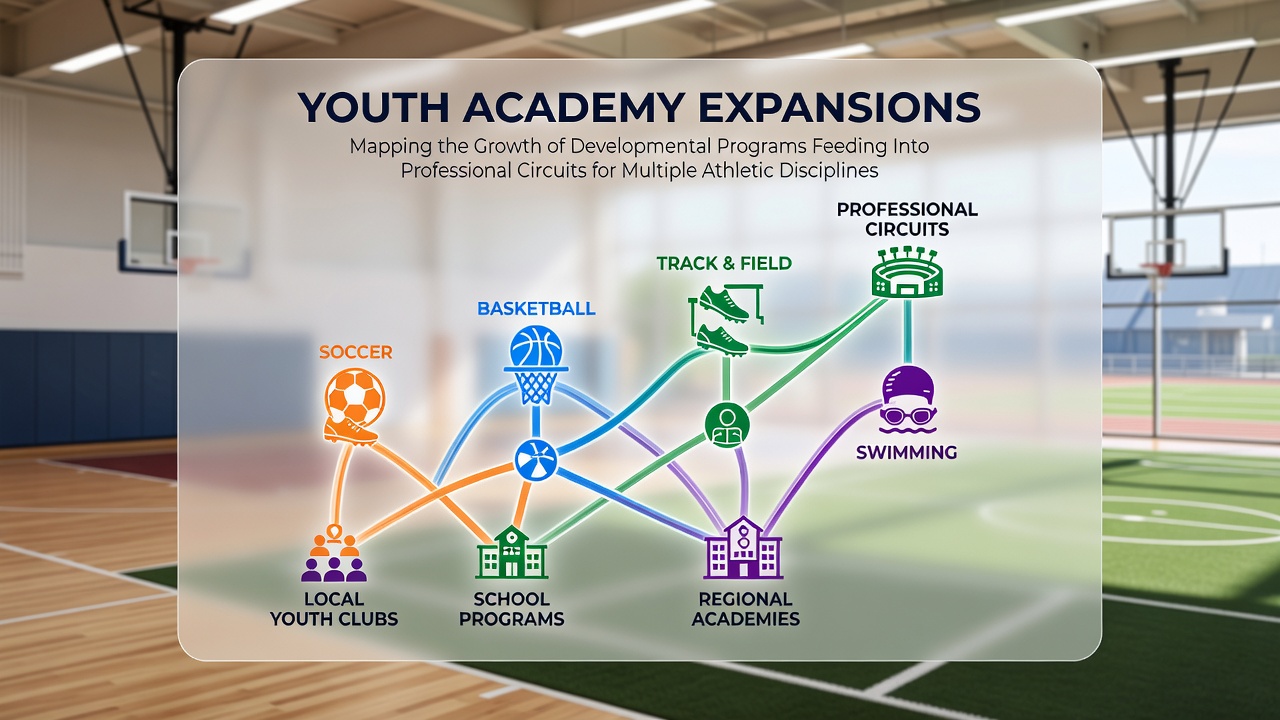
Youth academy expansions have accelerated across multiple athletic disciplines since the early 2020s, creating structured pathways that connect developmental programs directly to professional leagues in soccer, basketball, tennis, baseball, and other sports. Data from regional sports governing bodies shows consistent increases in enrollment numbers and facility investments, with programs adapting to feed talent into circuits like Major League Soccer, the NBA G League, ATP tours, and minor league baseball systems. Observers note that these expansions often involve partnerships between clubs, educational institutions, and national federations, which coordinate age-group training with scouting networks that extend into professional drafts and academy-to-roster transitions.
Soccer Academy Networks Scaling Up Globally
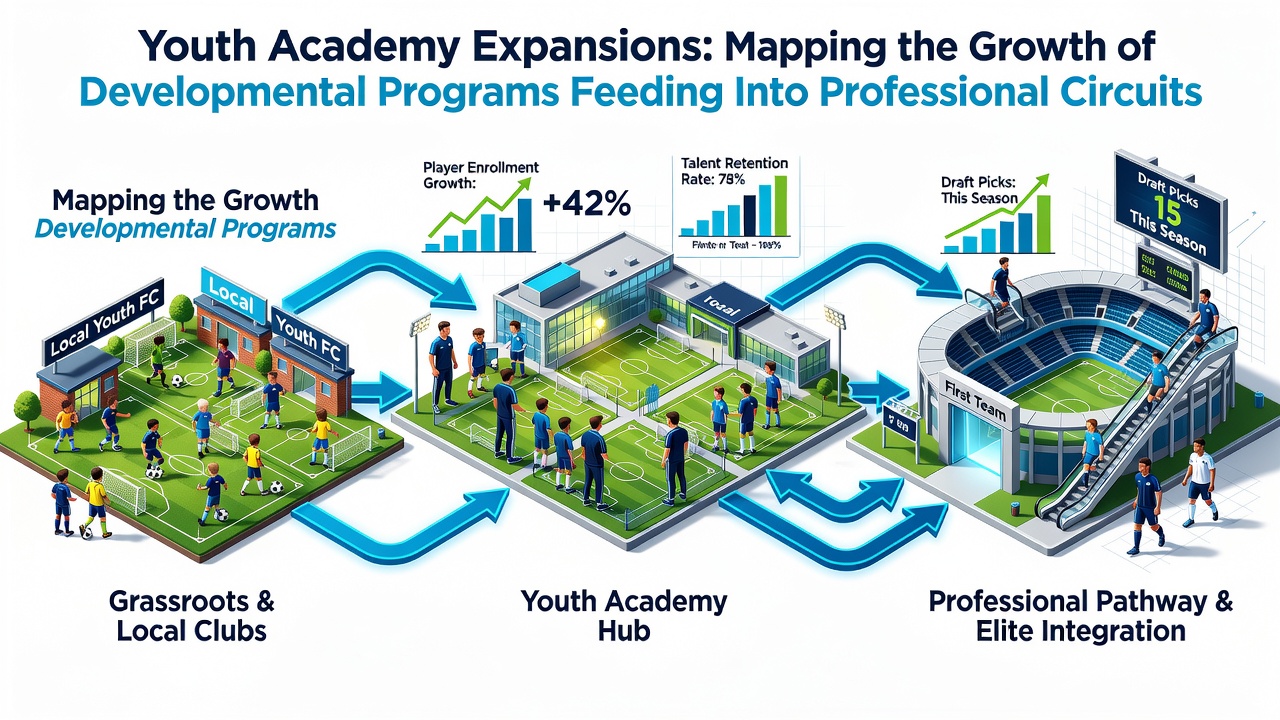
European and South American soccer clubs have expanded their youth facilities at a steady pace, adding residential campuses and technical centers that accommodate larger cohorts of players aged 8 to 18. Figures from the European Commission on sport participation indicate that academy spots in top-tier leagues grew by double digits between 2023 and 2025, driven by requirements for homegrown player quotas in competitions such as the UEFA Champions League. These programs emphasize periodized training blocks that align with senior team schedules, allowing prospects to progress through reserve squads before potential first-team integration. In June 2026, several clubs announced further site upgrades in Portugal and the Netherlands, reflecting ongoing infrastructure commitments tied to talent retention strategies.
Basketball Developmental Hubs and League Pipelines
Basketball academies in North America and Europe have mirrored this trend by establishing regional hubs that combine skill development with academic support. Reports from the NCAA document rising numbers of academy-affiliated athletes entering college programs, which then serve as feeders to professional drafts and overseas leagues. Training regimens at these sites incorporate motion analysis and recovery protocols that prepare players for the physical demands of G League and NBA systems. Partnerships with high school networks have extended reach into underserved areas, producing documented increases in diverse talent pools reaching professional tryouts and summer league invitations.
Multi-Discipline Integration in Tennis and Baseball
Tennis federations and baseball organizations have adopted hybrid models that blend individual sport academies with shared resources across disciplines. Data compiled by the Australian Sports Commission highlights growth in combined programs that expose athletes to complementary skills, such as agility drills transferable between court sports and field events. These setups feed directly into circuits including ATP Challenger events and minor league baseball affiliates, where scouting reports track academy graduates through performance metrics at junior Grand Slams and international tournaments. In practice, such integrations reduce redundancy in coaching staff while expanding access to specialized equipment and competition schedules.
Scouting and Transition Mechanisms
Scouting pipelines have become more formalized as academies implement standardized evaluation frameworks that align with professional league criteria. Industry reports from bodies like the Canadian Olympic Committee track how academy graduates advance through combine events and draft processes, with success rates measured by roster appearances in subsequent seasons. Technology integration, including video databases and wearable performance trackers, supports these transitions by providing quantifiable data that clubs review during recruitment windows. This approach has produced measurable upticks in international player movement into European soccer academies and American basketball developmental squads.
Challenges in Capacity and Equity
Despite expansion, capacity constraints remain evident in certain regions where facility availability lags behind enrollment demand. Government analyses from Sport Australia note disparities in access between urban and rural populations, prompting targeted outreach initiatives that include mobile training units and scholarship allocations. Equity considerations also influence program design, with federations introducing diversity benchmarks that shape intake policies and coaching hires. These adjustments occur alongside efforts to maintain competitive standards that prepare athletes for the rigors of professional environments.
Future Trajectories Through 2026 and Beyond
Projections based on current investment patterns suggest continued facility builds and curriculum refinements into the latter half of the decade. National sports agencies across multiple continents have outlined funding frameworks that prioritize long-term athlete development models, which balance early specialization with multi-sport participation to mitigate injury risks. As these programs mature, their output into professional circuits will depend on sustained coordination between developmental staff and league operations teams. The patterns established by mid-2026 provide a baseline for tracking how expanded youth infrastructures reshape talent distribution across disciplines.
Conclusion
Youth academy expansions continue to map new routes from grassroots training to professional circuits, supported by data-driven investments and cross-regional collaborations. The documented growth across soccer, basketball, tennis, and baseball illustrates interconnected systems that prioritize structured progression and measurable outcomes. These developments reflect broader shifts in how athletic talent is identified, nurtured, and transitioned into elite competition environments.